
Careful service for compact and sloped properties
Skyline Lawn Care Planned for Grade, Drainage, and Access
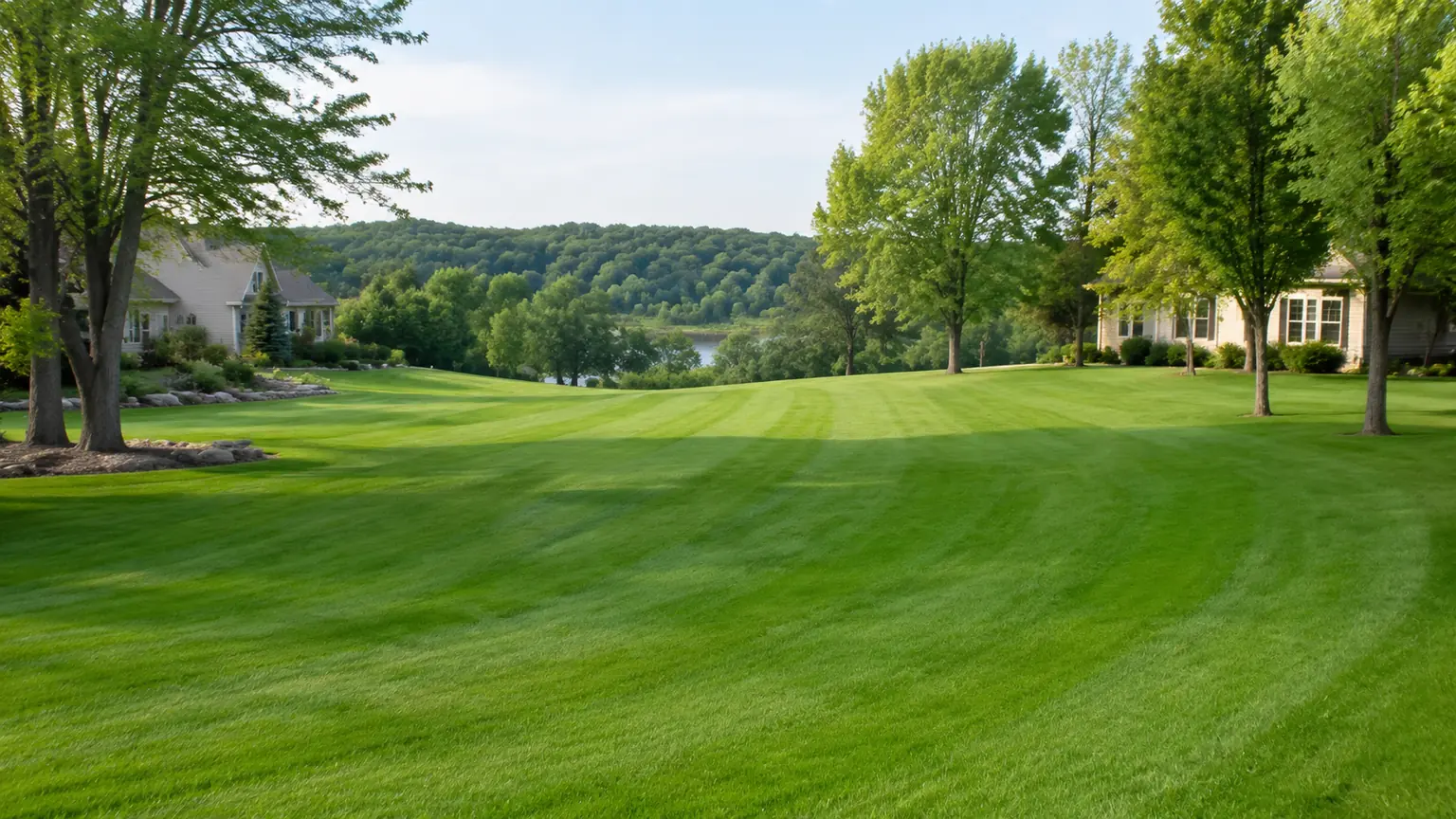
Skyline Lawn Care requires more than a standard suburban mowing pattern. The community’s compact streets, hillside setting, mature trees, and varied grades make equipment access, drainage, leaf movement, and winter storage especially important. Jason’s Lawn Care provides mowing, cleanup, aeration, dethatching, tree trimming, landscape material installation, hauling, and snow service with those practical limits in mind.
In fact, our family-operated team has served the Greater Mankato area for over two decades. We understand the regional growing season, yet every Skyline address still needs its own review. A steep front lawn, shaded side yard, tight gate, short drive, or downspout discharge can change how work should be completed.
Instead, the best plan avoids crowding the site with services. It establishes reliable regular care, then adds seasonal or corrective work where it improves turf health, landscape function, or access. Clear updates keeps those decisions connected throughout the year.
Help water move into soil instead of over it
Skyline Lawn Care for Root-Zone and Water Movement
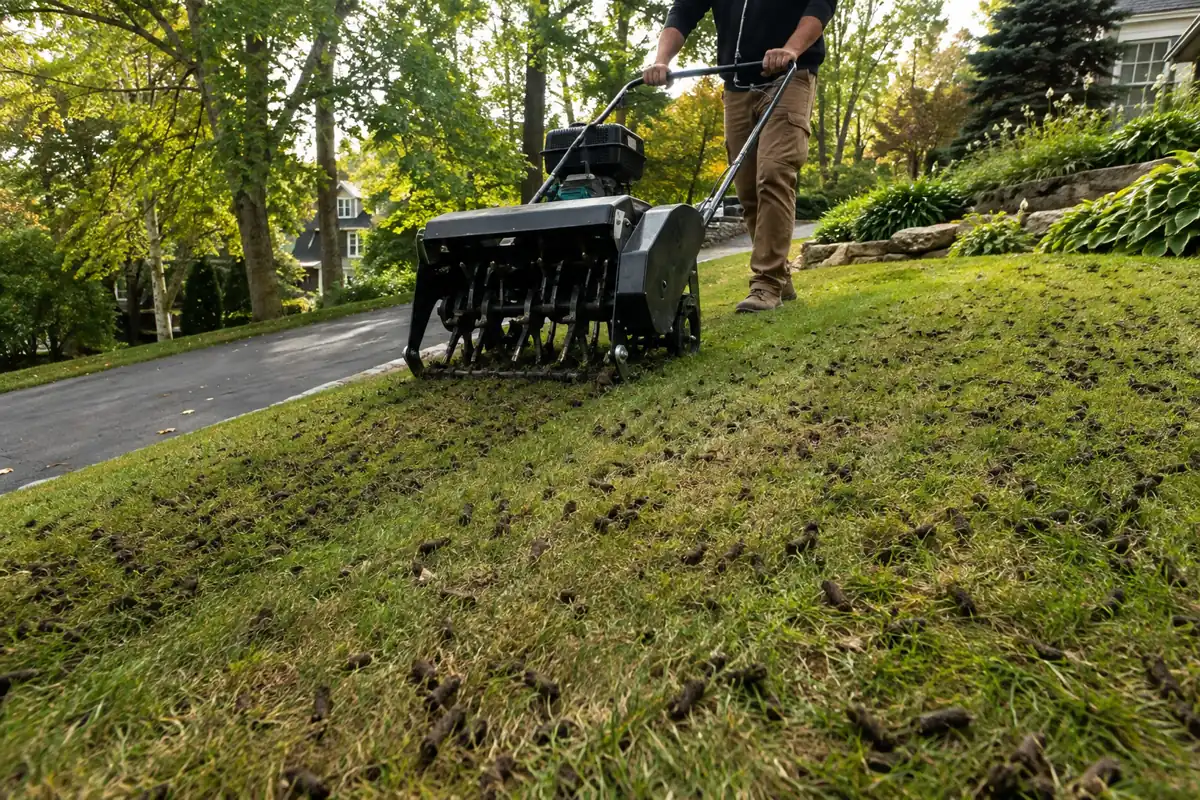
Because compacted soil has fewer open spaces to accept rain, the problem can be especially noticeable on a slope. Water begins moving downhill before it penetrates the root zone. Core aeration removes plugs through compacted turf, leaving channels that can improve the movement of air and moisture when conditions are appropriate.
By contrast, thatch is a different barrier. A dense layer of stems and roots can sit above mineral soil and prevent water from entering evenly. Dethatching removes the excess, but a thin layer is normal and should not be stripped by default. We inspect the surface and choose the service that matches the actual condition.
Still, neither process is a complete drainage solution. Water from a roof, hard surface, failed grade, or concentrated uphill source may overwhelm turf regardless of aeration. Erosion, structural drainage, and slope stabilization can require a specialist outside routine lawn care. We define that boundary so customers understand what the proposed work can reasonably change.
That means recovery timing matters. Cool-season turf generally responds best when extreme heat has eased and moisture supports new growth. Aerating soil that is powder-dry or saturated can defeat the purpose. We schedule around the ground at the site instead of relying on the date alone.
A controlled cut on terrain that demands attention
Skyline Lawn Care and Mowing for Hillside Yards
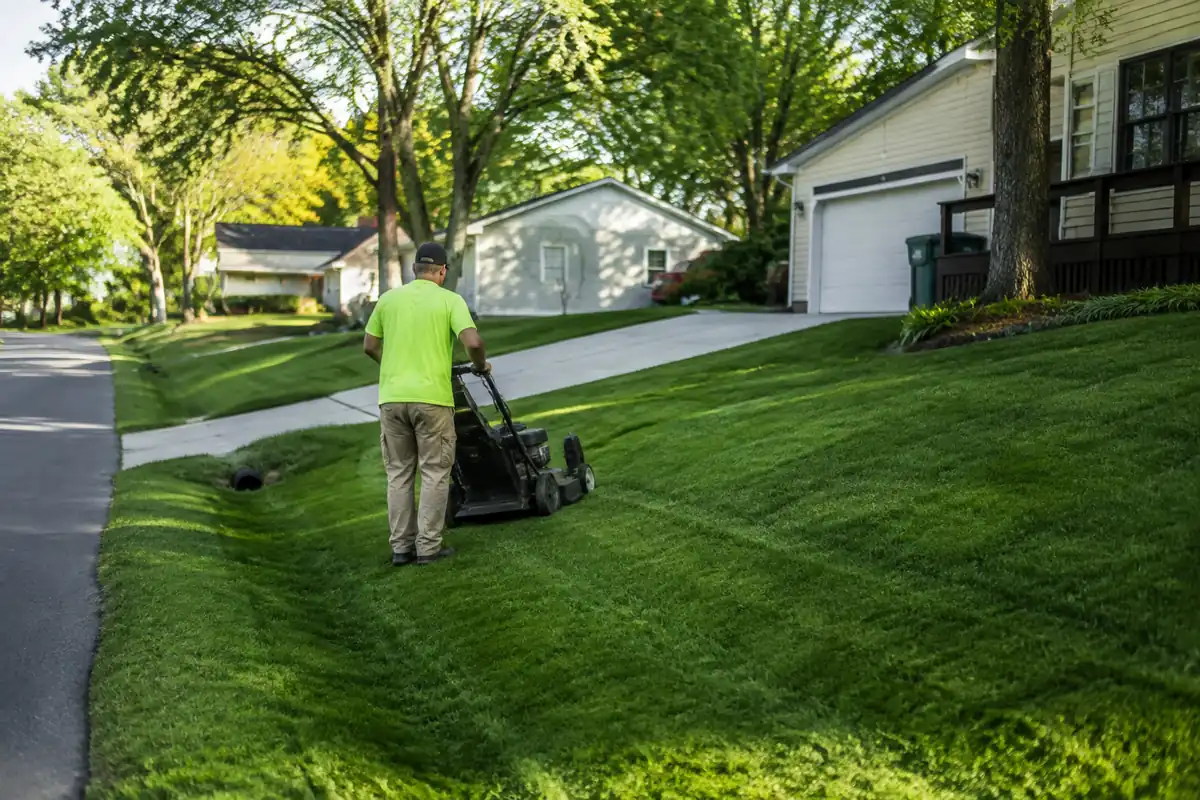
First, sloped mowing requires deliberate travel patterns. Repeated turns in one area can wear turf, and operating across a grade with unsuitable equipment can create safety and surface problems. We look at slope, firmness, obstacles, and access before settling into a route. The goal is an even cut achieved without treating the hill like level ground.
Beyond that, compact properties often place trees, walls, walks, beds, utilities, and neighboring features close together. Trimming therefore becomes a meaningful part of the visit. Clean detail work defines the lawn without throwing debris onto adjacent property or damaging trunks, edging, and plantings. Clippings are cleared from paved areas so they do not wash toward drains during the next rain.
At the same time, growth varies across the same hill. Upper exposed sections may dry in sun and wind, while lower or shaded sections remain moist. Cutting every area unusually short can intensify those differences. Appropriate height leaves more leaf surface over stressed soil and supports better recovery between visits.
However, weather can temporarily close the service window. Saturated slopes are vulnerable to rutting, sliding, and compaction. If the surface is not ready, postponing the visit protects the yard and the crew. A dependable route includes that judgment instead of letting a calendar date override the site.
Protect the slope before polishing the surface
A Drainage-Aware Skyline Lawn Care Plan
Above all, the most valuable work preserves turf coverage, keeps material where it belongs, and maintains usable access without worsening runoff or erosion. On a compact hillside lot, the order of work matters as much as the individual service. After all, a decision near the top can affect beds, turf, walks, and neighboring areas below.
Maintain Dense Turf Without Scalping the Grade
Grass roots help hold the surface, so mowing should preserve turf density. Cutting too low reduces leaf area and can expose soil on dry, sunny sections. Repeated travel in the same path can wear a line that later channels water. We vary movement where practical, use an appropriate height, and avoid saturated ground.
Watering should support roots without producing a sheet of runoff. Short, repeated observation is more valuable than a timer set without regard to rainfall. If water immediately moves downhill, the application rate may exceed what the soil can accept. The University of Minnesota Extension guidance on reducing yard runoff provides useful homeowner strategies beyond routine care.
Use Root-Zone Work With Realistic Expectations
Core aeration can help compacted turf accept moisture and support roots, especially in frequently traveled areas. It does not rebuild grade or correct a concentrated discharge. Dethatching can remove a heavy organic barrier but may temporarily expose soil. Both services need suitable recovery weather and should be scheduled only after the condition is identified.
Where a slope is actively eroding, the first priority is not cosmetic improvement. The source and path of water need to be understood. We can maintain accessible turf and explain what we observe, but structural correction may require a drainage, landscape, or engineering professional. Stating that limit protects the customer and the site.
Place Leaves, Material, and Snow With the Next Storm in Mind
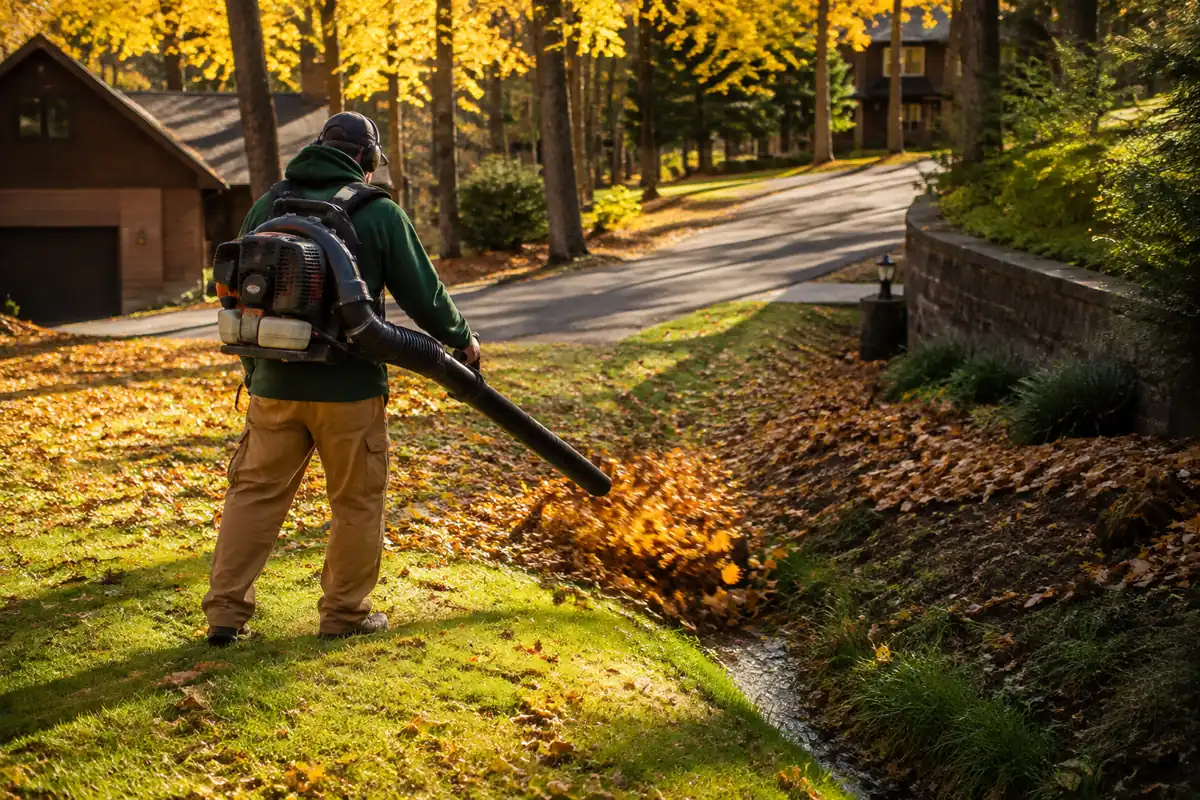
So, spring and fall cleanup should remove debris from the places where water needs to move. Leaves trapped at a drain, wall opening, or low edge can redirect runoff. Fresh mulch and rock require sufficient edging and the right depth so material stays in the bed. Downspouts should not be buried by decorative installation.
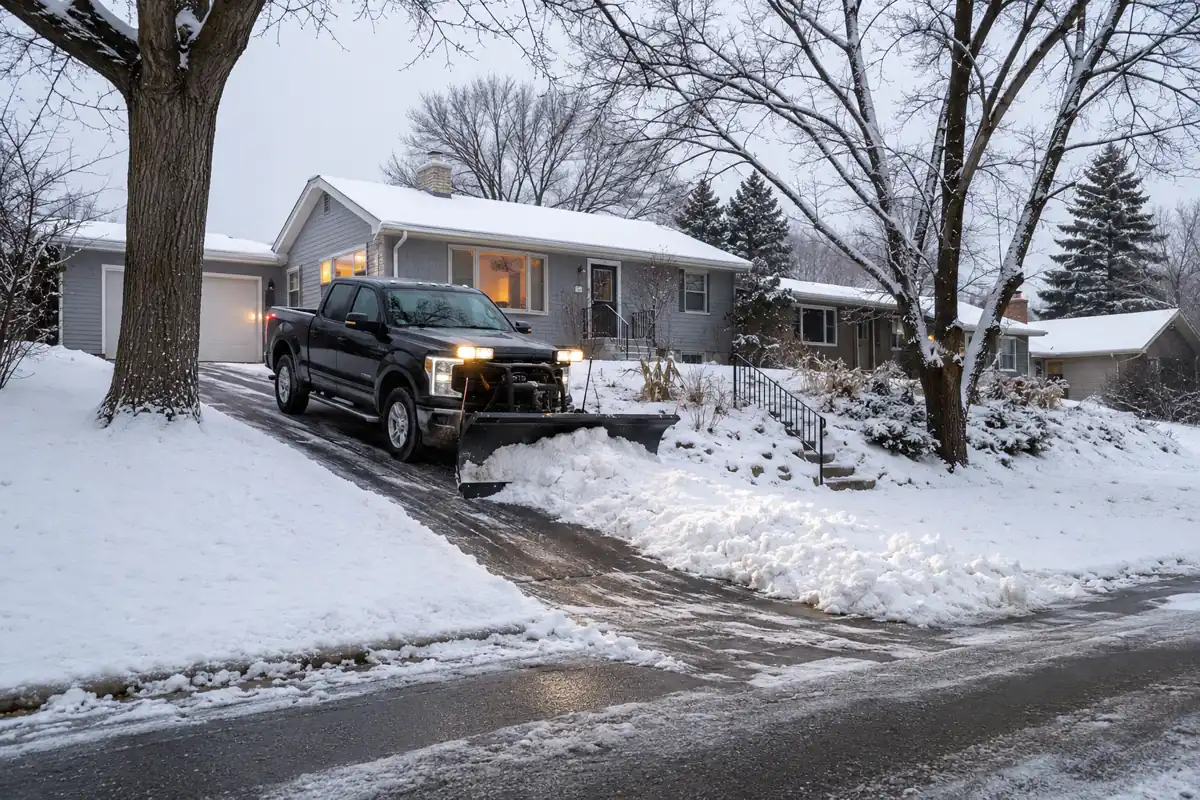
Likewise, snow storage is another form of material placement. Piles gain weight, reduce visibility, and release concentrated meltwater. A good winter plan selects areas that preserve driveway access without loading delicate plantings or blocking the drainage route. On a tight site, that may require more restraint and updates than it would on an open acreage.
A focused menu for year-round property function
Skyline Services for Turf, Trees, Materials, and Winter Access
Each service has a specific role. We combine them only when the site, season, and customer needs make the work useful.
Plan for water, leaves, and snow moving downhill
How Skyline Lawn Care Changes With Each Season
Also, grade amplifies seasonal changes. Debris, runoff, leaf cover, and snow storage all move through the site, so the care plan should anticipate their path.
Spring Drainage Check
Snowmelt shows where material has shifted and where water collects or accelerates. Spring cleanup removes branches, matted foliage, gravel, and debris while keeping drainage paths visible. Before mowing begins, soft sections and eroded edges should be identified so equipment does not worsen the damage.
Summer Surface Protection
Sun and wind can dry upper slopes while protected lower turf stays green. Mowing height should accommodate that difference, and watering should avoid creating runoff. Mulch or rock must stay contained within beds so it does not migrate downhill into grass, walks, or neighboring areas.
Autumn Leaf Movement
Likewise, leaves rarely remain where they first land on a hill. Wind and rain move them toward fences, walls, drains, and low corners. Fall cleanup protects turf and keeps those collection points from becoming dense wet mats. It also restores visibility before snow hides curbs and edges.
Winter Grade and Storage
A sloped or compact driveway has limited room for error. Snow placement should preserve sight lines, drainage, and space for the next storm. We identify obstacles and stacking areas before accumulation so each service visit follows a known plan instead of searching for space under pressure.
Control, updates, and respect for boundaries
What Careful Skyline Lawn Care Requires
On a compact grade, small mistakes are more visible and can move beyond the work area. Professional care starts by understanding where equipment, water, debris, and material can travel.
Recognize the Direction of Movement
For that reason, clippings, leaves, mulch, rock, water, and snow respond to slope. We consider the downhill path before beginning work. Hard-surface cleanup keeps material out of streets and drainage structures. Bed installation includes containment. Snow storage accounts for meltwater. These choices are practical safeguards, not decorative extras.
Match Equipment to Access
Narrow gates, close structures, steep side yards, retaining edges, and short turning areas influence which equipment can work safely. A machine that is efficient on open turf may be unsuitable in a tight section. We review access and identify areas that need a different method instead of forcing equipment where it does not belong.
Pause When Conditions Create Risk
So, wet grass and soft soil reduce traction and increase surface damage on a slope. High winds scatter cleanup material, and repeated freeze-thaw cycles can change driveway conditions. We maintain a dependable schedule while allowing for pauses that protect the crew and property. Customers receive an update when the weather or ground changes the service plan.
Fit the service to the footprint
Residential and Managed Grounds With Site-Specific Needs
For example, small lots are not simple lots. Close features and limited access can make careful planning more important than it is on a larger open site.
Residential Hillside Properties
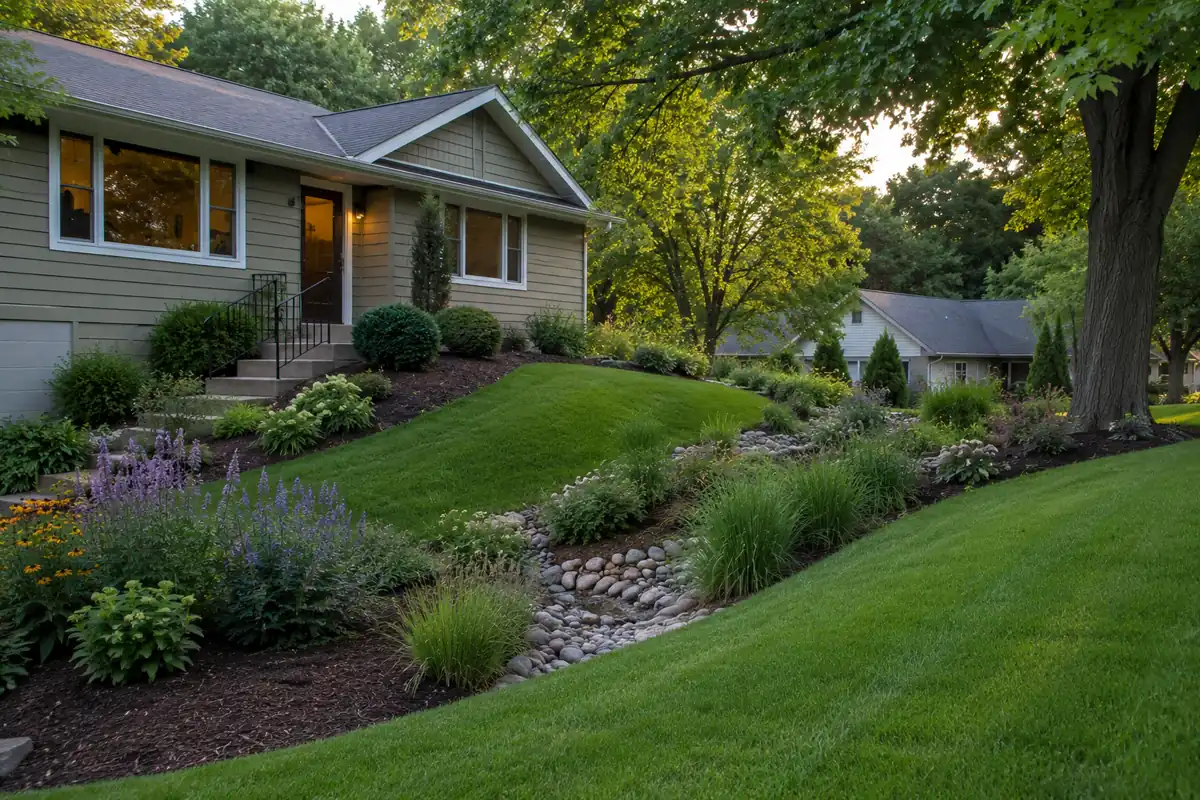
Homeowners need yards, walks, beds, and drives that work together in a limited footprint. Regular mowing maintains the baseline. Cleanup controls debris that moves across grade, and material or trimming work preserves practical edges and clearance. Winter planning keeps a short drive usable without sacrificing every planting bed to snow storage.
Associations and Managed Sites
Shared or managed grounds add updates and access responsibilities. The service may affect neighboring units, parked vehicles, common travel areas, and drainage across more than one space. We define the included areas and operational needs early, then maintain a route that respects the site’s compact setting.
Service for a small city with a distinct setting
Local Skyline Lawn Care for Distinct Hillside Terrain
Skyline is a compact city adjoining the Mankato area, with a strong residential identity and a setting shaped by elevation, trees, and natural character. The City of Skyline describes shared community values and a commitment to preserving the environment. Those needs make thoughtful private-property care especially appropriate.
The city has also highlighted stormwater and flooding concerns, reminders that water moving through a hillside community does not stop at a property line. Routine lawn service cannot redesign public or structural drainage. It can, however, avoid adding preventable problems by keeping clippings out of streets, respecting low areas, placing landscape material carefully, and not operating heavy equipment on saturated soil.
Public parks and the surrounding landscape contribute green space, while private yards create the day-to-day streetscape. Some lots receive mature shade; others are exposed at the upper edge. A few feet of elevation can change moisture and growth. We look at those factors on the ground instead of applying assumptions from another neighborhood.
Close property lines also make neat work important. Clippings, loose leaves, or displaced rock can quickly cross a boundary or reach the street. A controlled route, clean paved surfaces, and careful material handling respect both the customer’s yard and the surrounding neighborhood.
Because Skyline is part of our established Greater Mankato service area, routing is local and updates is direct. The site still receives an individual plan. Proximity helps us deliver consistently; close observation helps us deliver the right work.
A compact property deserves a precise first review
Preparing the Address for Safe, Reliable Visits
First, the review focuses on movement. We note how the crew enters, where equipment can turn, where water travels, and which areas the customer uses most.
Walk the Route Before Establishing It
We identify slopes, steps, gates, walls, beds, drainage features, utilities, trees, parking, and neighboring boundaries. The customer can flag soft areas, invisible fencing, irrigation, recent work, or locations that wash during heavy rain. That information helps us choose a mowing pattern and define what can be serviced efficiently.
For seasonal work, the review shifts slightly. Aeration requires suitable soil and recovery window. Material work needs delivery and containment. Cleanup depends on where leaves collect. Snow service requires enough equipment room and a realistic storage plan. Each job uses the same property map for a different purpose.
Update the Plan When Water or Use Reveals Something New
A dry estimate cannot show every drainage pattern. After heavy rain, customers may notice runoff, saturation, or material movement that changes needs. Regular visits can also reveal wear from a pet route, play area, or repeated footpath. We use those observations to refine the care approach.
Some changes are simple: a different mowing direction, a delayed visit, a clearer edge, or more frequent leaf attention in one corner. Others require outside expertise. A trusted local service relationship should make that distinction easier, not encourage the customer to buy a lawn treatment for every landscape problem.
Give a sloped property the planning it deserves
Request Skyline Lawn Care Planned for Your Terrain
Grade, drainage, tight access, leaves, landscape materials, and snow all affect how a Skyline property should be maintained. Jason’s Lawn Care can coordinate mowing, turf care, cleanup, tree trimming, material installation, hauling, and winter service with those factors in mind. Show us what you are dealing with, and we will help you plan the work from top to bottom.