
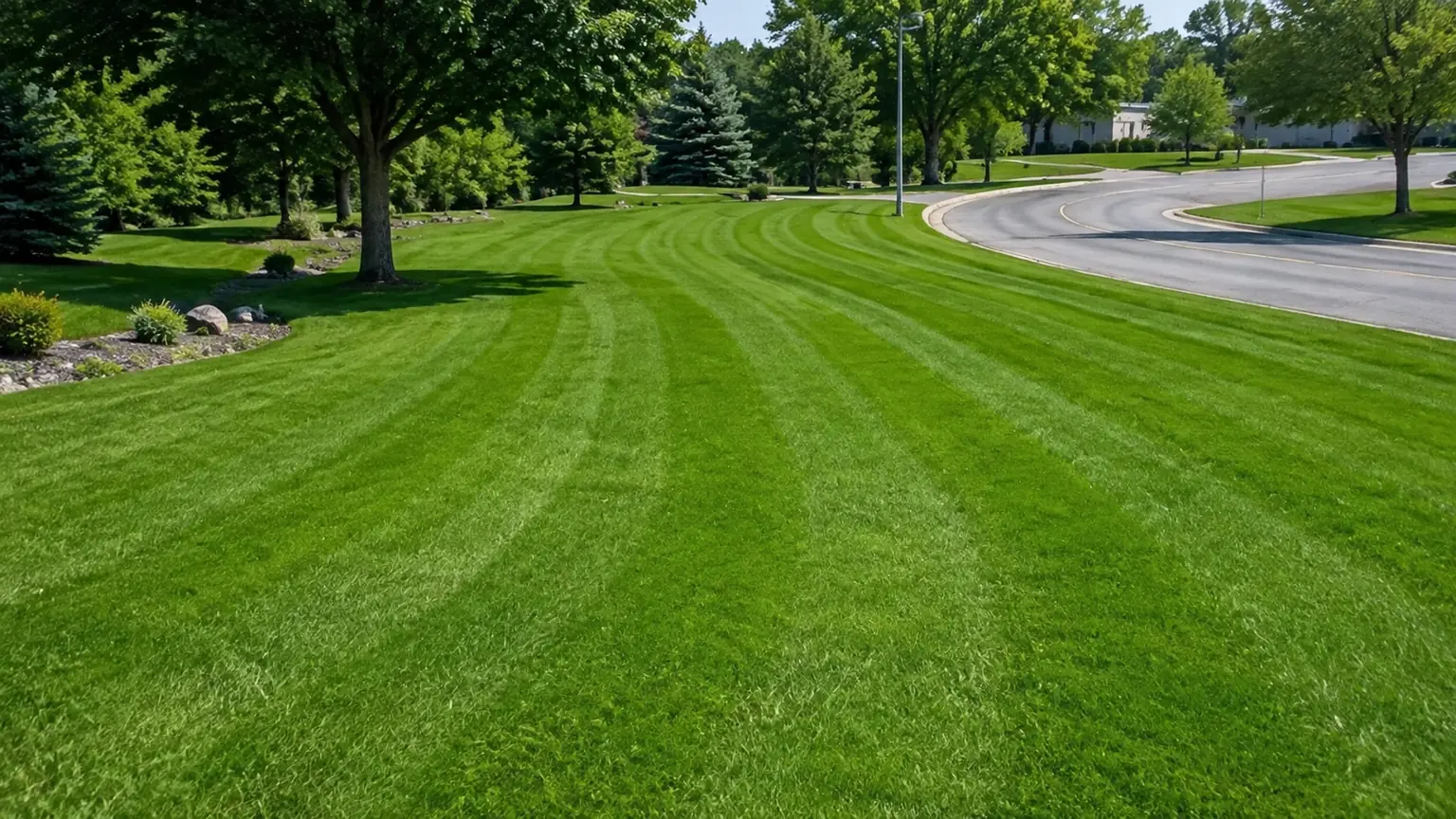
Responsive care for a varied city landscape
Mankato Lawn Care for a City With Many Types of Properties
Mankato Lawn Care has to work across a city where no two properties feel quite the same. Jason’s Lawn Care maintains residential yards, rental properties, offices, shops, and commercial grounds with weekly mowing, seasonal cleanup, aeration, dethatching, tree trimming, landscape material installation, and snow service. For more than two decades, our family-operated business has helped Greater Mankato customers keep outdoor spaces presentable, usable, and prepared for the next season.
Mankato includes mature neighborhoods, newer development, busy commercial corridors, shaded lots, open sites, slopes, and areas where runoff or compaction deserves attention. Those differences affect equipment access, mowing height, leaf volume, water use, and winter needs. For that reason, we build service around the address, the people who use it, and the conditions the crew will encounter.
For instance, customers can choose a focused regular service or coordinate several parts of the site with one local team. Clear updates connects those visits, so mowing, fall cleanup, landscape material, and winter access work together as one plan instead of unrelated purchases.
Different users, one expectation of consistency
Mankato Lawn Care for Different Property Needs
A household wants more usable time at home. A business needs an exterior that supports customers, employees, and operations. We shape the schedule around those distinct outcomes.

Residential Care
In many cases, home service begins with dependable weekly mowing and expands only when the yard needs more. Spring and fall cleanup remove the concentrated work that consumes weekends. Aeration or dethatching can address diagnosed turf conditions, while mulch, rock, and trimming improve beds and clearance. The homeowner receives one practical contact instead of managing a different provider for every seasonal task.
Commercial Grounds
At the same time, commercial work requires predictable updates and awareness of the operating site. Mowing may need to avoid peak customer periods, material delivery must preserve access, and snow needs should reflect entrances, loading, parking, and tenant obligations. We discuss those needs in advance and maintain a route that supports the site’s professional appearance.
Coordinate the exterior instead of juggling vendors
Coordinated Outdoor Services for Mankato Properties
Regular care creates consistency, while seasonal work solves the issues that appear at specific times of year. Build the service mix around the site instead of accepting a generic bundle.
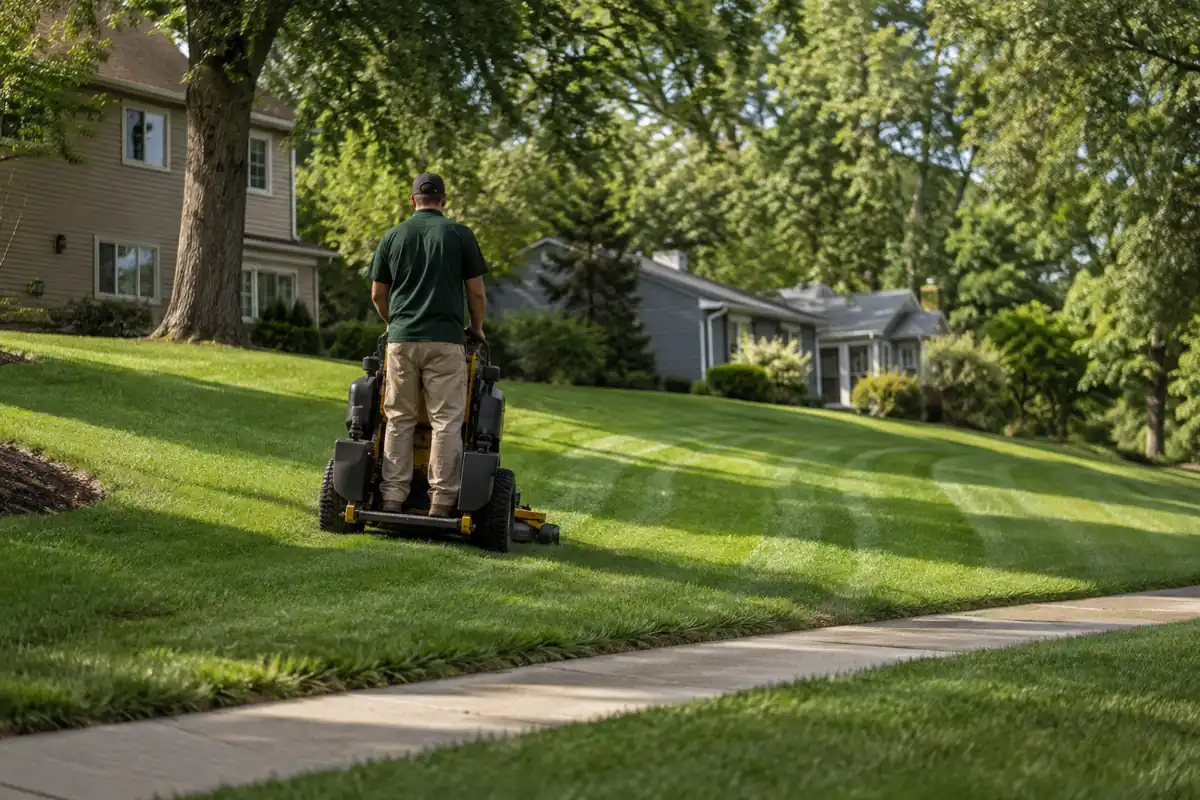
Reliable appearance from curb to back yard
Weekly Mankato Lawn Care and Mowing That Fits the Site
In a city setting, mowing affects more than grass height. Clean edges along public walks, driveways, curbs, signs, and planting beds shape the way the whole property is perceived. A complete visit combines an appropriate cut with trimming around fixed features and cleanup of clippings from hard surfaces. That consistency matters at home, and it is especially visible at customer-facing or tenant-occupied properties.
For example, older neighborhoods often have trees, narrow gates, irregular lot lines, and small details that require careful maneuvering. By comparison, newer or commercial sites may have larger open areas, drainage features, islands, signs, and parking activity. We learn those patterns and use a route schedule that makes regular service efficient without treating the site like an empty rectangle.
Of course, growth changes with rainfall and temperature. Spring can bring rapid turf growth, whereas high summer temperatures may slow the lawn and increase stress. We adjust cutting height and make sensible weather decisions so the route does not damage saturated ground or remove too much leaf area during dry conditions. A temporarily delayed cut is preferable to ruts that remain after the soil dries.
Before the first regular visit, customers should point out irrigation heads, invisible fencing, soft ground, locked gates, downspouts, newly seeded sections, or other sensitive areas. Vehicles, hoses, toys, portable signs, and pet waste should be removed from the work zone. That preparation lets the crew focus on an even, efficient result.
Professional care is organized care
Keeping Busy Residential and Commercial Grounds on Track
Good exterior care reduces friction for the people who live, work, shop, or visit at the site. That requires attention to the job and to everything surrounding it.
Access and Timing Are Part of the Work
A service window has to account for gates, vehicles, pedestrians, customers, deliveries, pets, and shared-use spaces. We ask about those details before they become obstacles. At a residence, that may mean confirming a fenced-yard routine. At a business, it may mean sequencing work so equipment is not operating where customers are arriving. Clear access protects efficiency and limits disruption.
Weather Decisions Protect the Result
However, Mankato weather can change a plan quickly. Saturated turf does not benefit from heavy equipment, high winds can make cleanup inefficient, and a storm sequence can shift snow needs. We monitor conditions and communicate when an adjustment protects the site or the quality of the work. The goal is dependable service, not blind adherence to a calendar when conditions have changed.
Details Should Stay Connected
As a result, repeated service creates useful familiarity. A crew that knows the site can notice a branch reducing clearance, leaf buildup blocking a low area, repeated wear near an entrance, or material washing from a bed. We bring those observations into the conversation so the customer can decide what deserves attention. That continuity is more valuable than a string of isolated visits with no shared history.
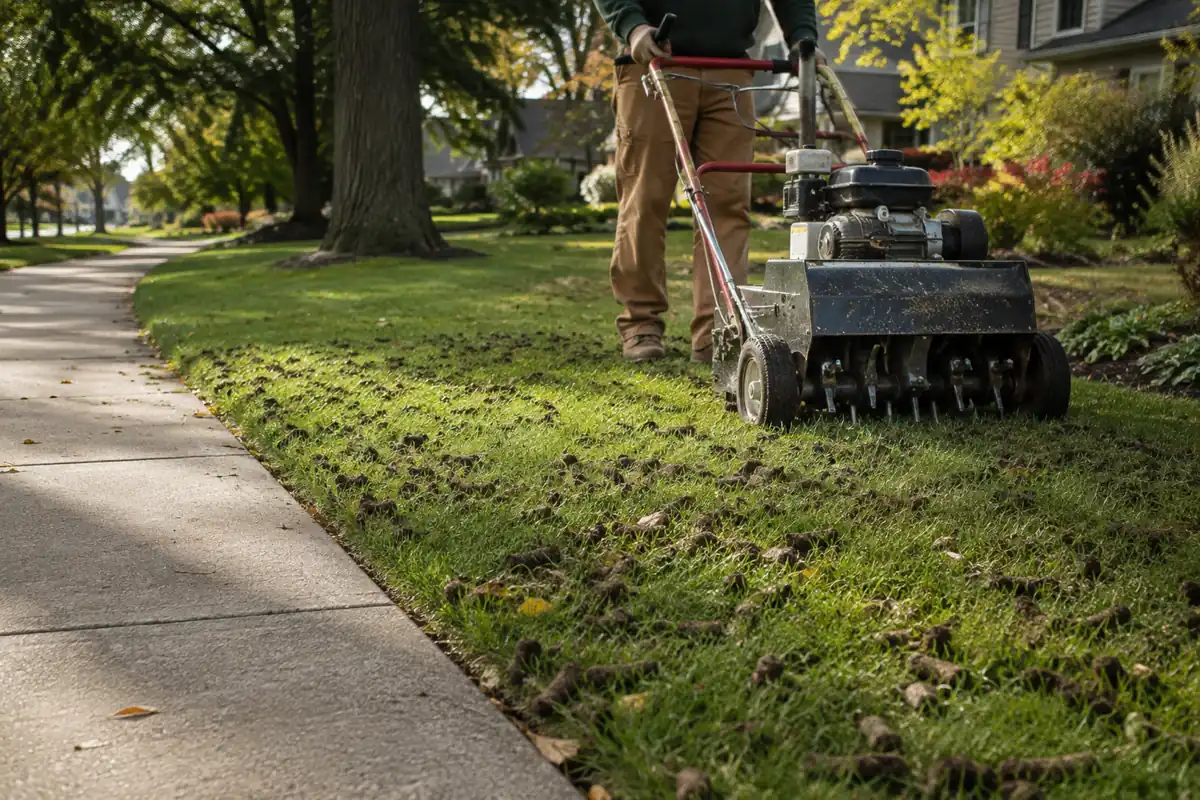
Improve the root zone, not just the surface
Mankato Lawn Care for Aeration and Dethatching
In other words, urban turf receives concentrated use. Children, pets, foot traffic, parked equipment, mowing turns, and repeated travel between doors and driveways can compress the soil even when the rest of the lawn looks healthy. Compaction reduces pore space, which makes it harder for air and water to reach roots. Core aeration relieves that pressure by removing plugs; shallow holes do not provide the same result.
A thick thatch layer creates a separate challenge. Organic material naturally accumulates near the soil surface, but too much can hold roots above the soil, slow water movement, and create a soft feel underfoot. Dethatching physically removes excess material. Because the process is disruptive, it should follow an inspection and be scheduled when cool-season grass can recover.
Slopes and runoff add another concern. Water that moves quickly across compacted ground may never soak where the lawn needs it. Aeration can improve infiltration in the right areas, but it is not a substitute for correcting an active drainage problem or stabilizing erosion. We identify the likely cause and explain where turf service can help. We also point out when a different solution is needed.
Late summer and early fall often provide useful recovery window in southern Minnesota, though heat, drought, and soil moisture can change the schedule. The University of Minnesota Extension lawn care calendar provides a research-based seasonal framework. The final timing still depends on the lawn in front of us.
A city property has different needs each quarter
How Mankato Lawn Care Changes With Each Season
Care is most effective when each visit prepares the site for what comes next. That connection is especially useful where turf, trees, beds, parking, and public-facing access share limited space.
Spring Recovery and Route Setup
First, spring brings debris, gravel, broken branches, matted turf, and unpredictable moisture. Cleanup clears the surface and gives the crew a better view of winter damage, drainage paths, and soft areas. Regular mowing then begins when growth and soil support regular traffic, not simply on the first warm afternoon.
Summer Growth and Water Awareness
Summer brings a balance between appearance and stress management. Mowing height should protect leaf area, and irrigation should respond to rainfall instead of running on habit. City rules and conservation goals also matter. Water that lands on pavement or runs down a slope is not helping the turf, so timing and coverage deserve attention.
Autumn Leaves and Root Work
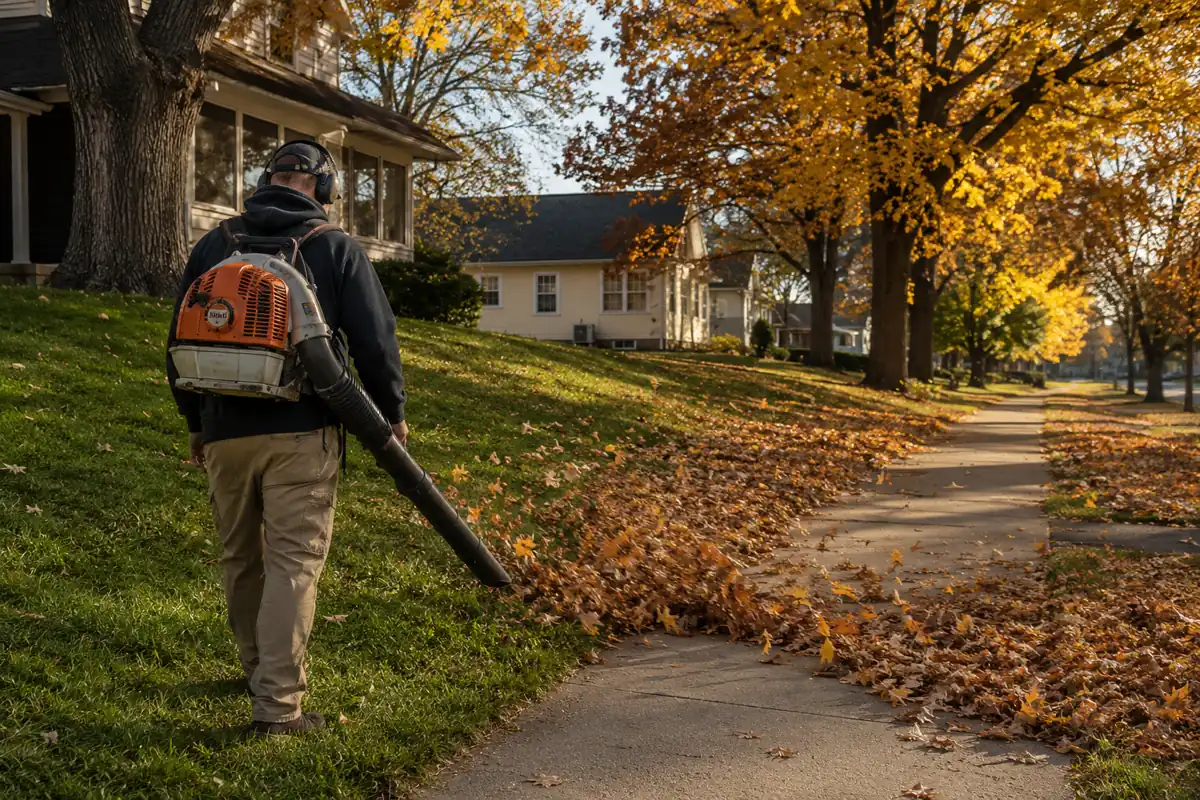
Mature canopy can produce heavy leaf volume in a short period. Removing that cover protects turf, clears storm drains and curbs, and keeps beds accessible. Fall is also a useful period to address compaction with aeration when soil moisture and active growth support recovery before winter dormancy.
Winter Operations
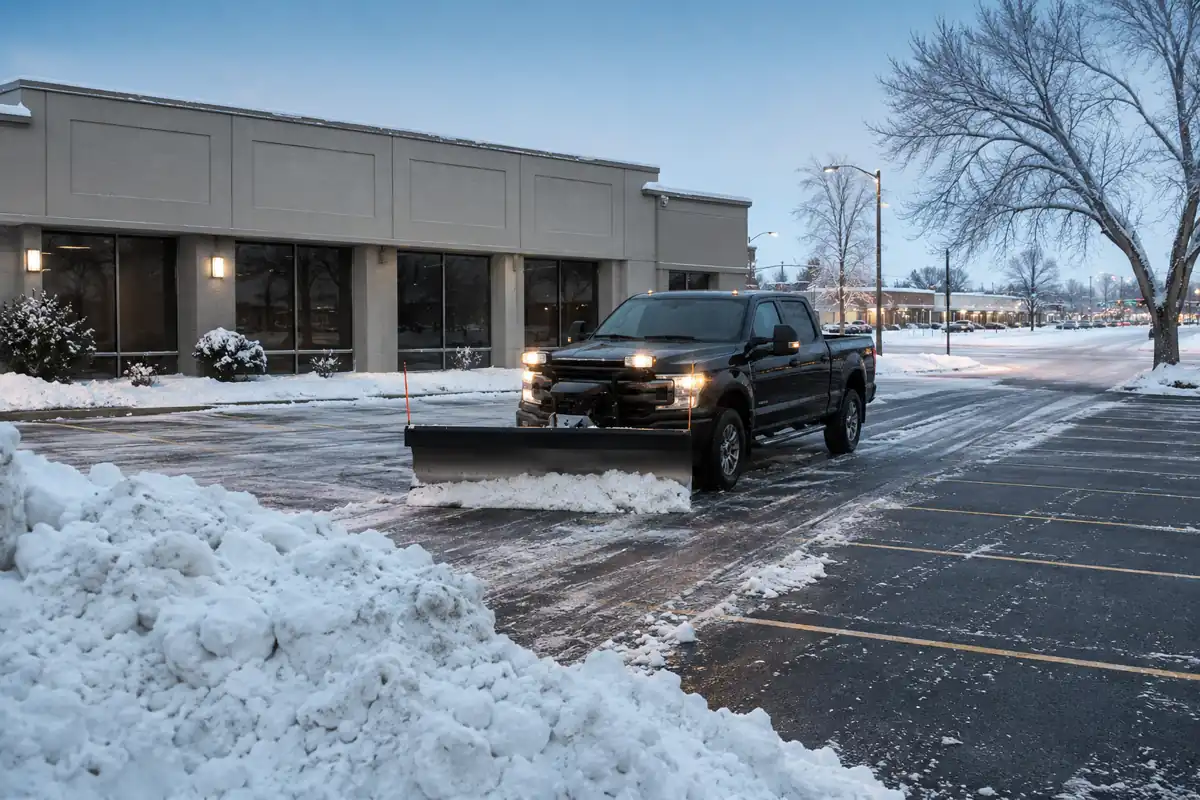
Snow changes the site from a landscape into an access system. Homeowners need usable drives and entries; businesses may need parking, delivery lanes, customer walks, or employee arrival coordinated around operating hours. Planning stacking areas and needs early creates a safer, more efficient response when storms overlap.
From first walk-through to seasonal follow-through
A Service Route That Still Learns Each Address
Efficient routes let a local crew serve the city consistently. Site notes, direct updates, and condition-based decisions keep that efficiency from becoming impersonal.
Define What “Maintained” Means at This Address
The first step is not a long package list. It is a conversation about the site, the immediate need, and the standard the customer expects. We review access, regular trouble, areas of concentrated use, sensitive features, and timing conflicts. That information helps separate essential work from optional improvements.
For mowing, we establish the route and clarify how weather delays are handled. For material, trimming, cleanup, or turf work, we define the intended result and any preparation. For snow, we identify priority areas and storage. The customer should understand the work before it appears on the schedule.
Keep the Plan Current
Meanwhile, properties evolve during a single year. A construction project may compact soil, a new tenant may change traffic, a mature tree may alter shade, and a hard rain may expose a runoff path. Regular service gives the crew repeated context for those changes. We can raise a concern without turning every observation into a sales pitch.
At seasonal transitions, we review what is coming next. Fall cleanup informs snow storage; spring cleanup reveals bed and turf repairs; summer mowing shows drought or traffic patterns. That sequence lets one visit support the next and helps the owner plan costs before a seasonal deadline arrives.
Care informed by the city around it
Local Mankato Lawn Care Across a Varied Landscape
Mankato’s landscape is not flat or uniform. The city’s natural-resource information highlights ravines, grasslands, rivers, woodlands, parks, and an extensive urban tree population. Those features contribute to the area’s character, while slopes, shade, roots, and stormwater patterns create real care concerns for nearby private property.
The City of Mankato natural-resources program also emphasizes the relationship between land, water, trees, and stormwater. A lawn service company does not replace an engineer or municipal program; however, routine decisions can still reduce unnecessary runoff. Keeping clippings off streets, avoiding work on saturated soil, and installing landscape material with drainage in mind are sensible parts of responsible property care.
City properties vary from shaded residential lots to exposed commercial acreage. A downtown-adjacent property may have narrow access and heavy pedestrian use. A site near a developing edge may receive more wind and sun. Older canopy can create leaf volume and root competition, while newly older turf may need protection from traffic. Each condition changes how mowing, cleanup, and seasonal work should be approached.
Because Jason’s Lawn Care operates throughout Greater Mankato, the city is the center of an regular route, not an occasional trip. That proximity supports predictable scheduling, quick updates, and practical knowledge of the growing season. We still judge every address independently, because even adjacent lawns can differ in grade, soil disturbance, irrigation, and use.
Match the care budget to real needs
Building a Smarter Mankato Lawn Care Plan
A complete plan does not require every service every year. It requires a clear baseline, a way to diagnose trouble, and timely decisions before seasonal conditions close the window. The most useful plan also distinguishes care from structural work, so routine service supports the site without promising to solve problems outside its scope.
Use Mowing as a Continuing Property Check
Weekly mowing keeps turf manageable and presents a consistent exterior, but its repeated schedule offers another benefit: changes become easier to notice. A patch that stays wet, a route that thins under traffic, a damaged sprinkler head, or unusual growth can be identified sooner when the same team returns regularly. The customer can then decide whether the issue needs observation, a simple adjustment, or separate professional attention.
Mowing decisions should also respect water. The City of Mankato water-conservation guidance sets local watering times and odd-even address schedules while encouraging efficient irrigation. Early watering, correct coverage, and attention to rainfall are more useful than frequent shallow cycles. Taller summer turf and properly directed irrigation can work together to reduce stress without sending water across pavement.
Schedule Soil and Cleanup Work for Recovery
Aeration and dethatching are not cosmetic add-ons. They alter the growing environment and should be timed when turf can recover. A compacted path may benefit from core aeration; a lawn with a genuinely thick organic layer may need dethatching. If poor drainage, shade, or wear is the primary problem, those services alone will not solve it. Diagnosis keeps expectations realistic.
Cleanup work has a broader purpose than collecting leaves. Spring service reveals winter damage, opens drainage paths, and clears hard surfaces. Fall service protects turf, curbs, beds, and access areas from heavy leaf cover. On commercial sites, cleanup also supports visibility and reduces debris where customers walk or vehicles travel.
Plan Materials, Trees, and Snow as One Exterior System
Landscape beds, trees, parking edges, walks, and snow storage compete for space on many city properties. Mulch should stay clear of trunks and siding, rock needs containment, and trimming should preserve clearance without careless overcutting. Before adding material, consider where downspouts discharge and where plowed snow will melt. A beautiful bed that blocks drainage or occupies the only practical snow-storage area creates a new problem.
Winter planning is especially important at commercial sites. Decide which entrance opens first, where employees park, how deliveries arrive, and which corners must remain visible. At home, identify the primary driveway, walk connection, mail access, and safe stacking locations. Early decisions allow the route and equipment to match the site before a storm makes every choice urgent.
One local team can handle more of the exterior
Make Mankato Lawn Care Easier to Manage
Stop coordinating every outdoor task separately. Jason’s Lawn Care can combine regular mowing with aeration, dethatching, cleanup, tree work, mulch or rock installation, hauling, and snow service for homes and commercial sites. Tell us what needs attention, and we will help you turn it into a clear service plan.