

Leave the property ready for snow, not buried under leaves
Fall Clean-Up Built Around Leaf Volume and Winter Access
A practical Fall Clean-Up manages what the property has actually collected instead of treating every leaf as the same problem.
Autumn debris arrives in waves. One tree may finish early, another may hold leaves through several freezes, and wind can move material from an open lawn into beds, fences, entrances, or neighboring corners overnight. Meanwhile, wet leaves can mat against cool-season turf and hide walks just as shorter days make access more important.
Jason’s Lawn Care looks at the full property, including the amount of turf still visible, the condition of the leaves, drainage routes, bed edges, and the places snow will soon occupy. Therefore, the plan can combine sensible leaf processing, collection, and final surface cleanup without turning the visit into a generic bag-everything routine.
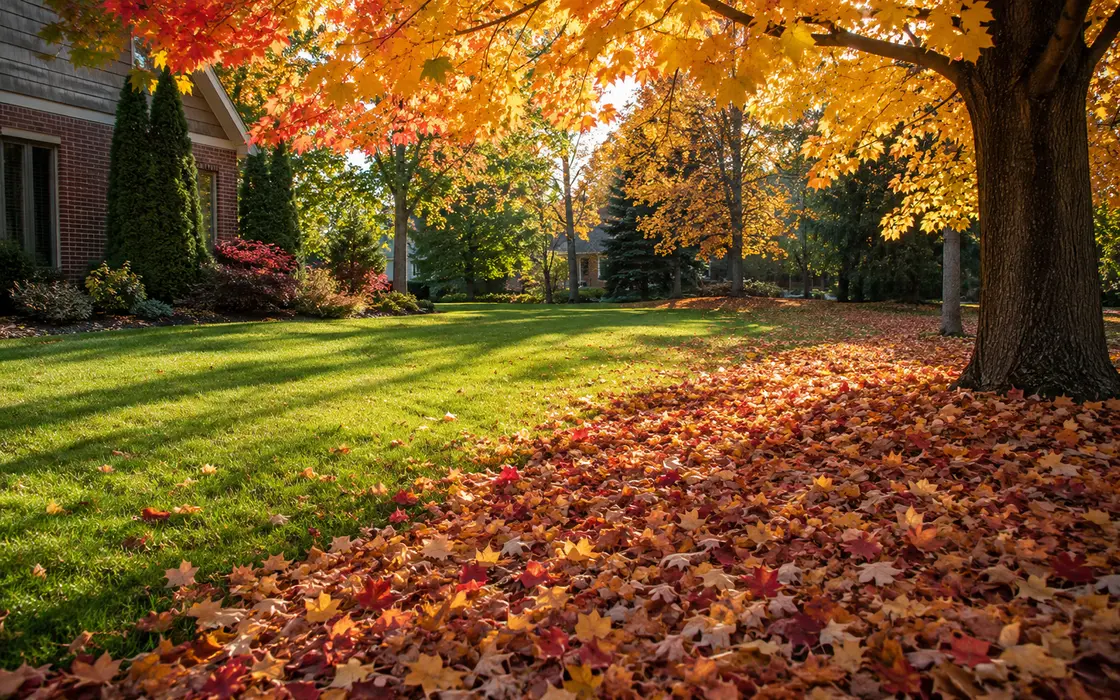
Manage the leaf load in the right place
The Work Behind a Winter-Ready Fall Clean-Up
A complete Fall Clean-Up follows the way leaves move through the property. Open turf, sheltered beds, paved entrances, and drainage points each need a different level of attention before winter closes the season.
Read Leaf Depth and Moisture
Dry scattered leaves behave differently from a wet blanket. We evaluate coverage and condition before deciding what can be processed on the lawn and what needs collection.
Open Walks and Entrances
Leaves hide edges, hold moisture, and collect where people step. Primary paths, drives, and doorway approaches receive a clear final pass.
Protect Beds and Drainage
Heavy piles are moved away from drains, window wells, and vulnerable crowns. Useful leaf cover can remain where it supports the landscape without blocking flow.
Finish After the Last Movement
Wind and late leaf drop can undo an early visit. The final route focuses on the visible surfaces and collection points that should remain orderly into winter.
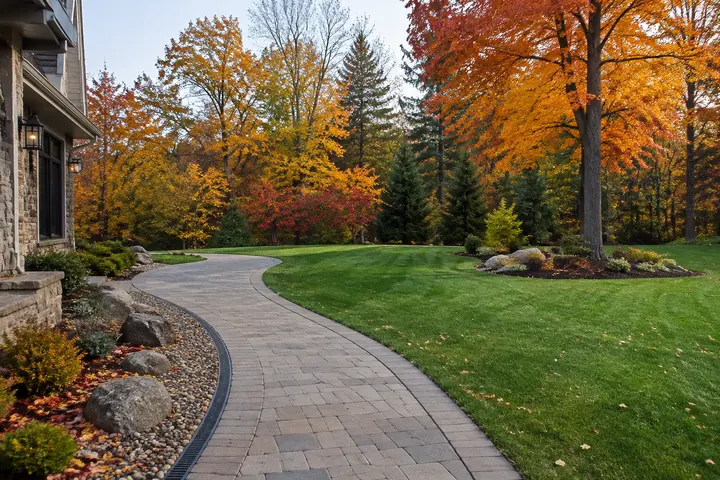
One visit cannot control every tree
Fall Clean-Up Timing Should Follow the Leaf Drop
Scheduling too early can leave the property covered again before winter, while waiting too long can turn dry leaves into a frozen mat. The useful window depends on tree species, wind, rain, frost, and the owner’s tolerance for temporary coverage. Consequently, some sites benefit from staged attention while others are best served by a focused final visit.
Leaf condition also affects the method. Dry leaves can break down and move more predictably. Wet leaves clump, add weight, and may require collection rather than repeated processing. Once snow enters the forecast, entrances, drainage points, and turf under the heaviest accumulation become the priority because those areas will be difficult to reach later.
The University of Minnesota Extension’s leaf-mulching guidance explains that moderate dry leaves can return nutrients to the lawn, yet excessive coverage can become detrimental. We use that distinction to avoid two extremes: leaving a smothering layer or removing useful organic material simply because it is visible.
Winter exposes the places cleanup missed
Clear Access and Turf Without Sterilizing the Landscape
A fall property does not need to look empty to look cared for. Leaves beneath shrubs and in appropriate garden areas can support habitat and soil, while leaves matted across turf or piled against entrances create different concerns. The work should distinguish between useful cover and material that obstructs the property.
For that reason, our finish check follows the main arrival and drainage sequence. Walks, steps, driveway edges, gates, window wells, and downspout routes remain visible. Lawn surfaces should not disappear beneath a continuous mat, and heavy pockets should not sit against plant crowns or structures where moisture can linger.
Branches and storm debris may also appear during the visit. Loose manageable material can become part of the cleanup, but damaged trees, hazardous limbs, or large hauling needs require a separate scope. Clear boundaries keep Fall Clean-Up efficient and prevent unapproved work from being hidden inside a seasonal visit.

Leaf movement follows the shape of the site
Fall Clean-Up for Residential and Commercial Properties
Home landscapes with trees and beds
Residential properties often collect leaves in fence lines, foundation beds, patios, play areas, and narrow side yards long after the open lawn looks clear. In addition, pets, decorations, hoses, and garden structures can complicate access. A complete route works outward from those trapped areas instead of only crossing the center of the yard.
Homeowners may also want selected leaves retained around perennials or beneath shrubs. That preference can be discussed before the visit so the result supports both a tidy exterior and the way the garden is managed.
Commercial sites preparing for winter operations
Businesses and shared properties need entrances, public walks, parking transitions, loading areas, and snow-storage zones ready before the first event. Leaf piles in those locations can conceal curbs, clog drains, and interfere with the next maintenance season. Therefore, access planning is central to the commercial cleanup.
The final appearance matters too. Customers and tenants continue using the property after the leaves fall, so loose material should not remain scattered across arrival routes. A clean handoff from autumn care to winter service helps the exterior stay predictable.
Good cleanup uses judgment, not a vacuum
Not Every Leaf Needs the Same Destination
Fall Clean-Up works best when it protects turf, keeps access open, and leaves useful organic material where the landscape can benefit from it.
Leaves are part of the seasonal landscape, not contamination. Finely processed dry leaves can settle into turf, while intact leaves can protect soil and habitat in selected garden areas. By contrast, thick wet layers across grass can block light and air, and piles around drains or structures can hold moisture in the wrong place.
A property-specific plan balances those roles. The crew may process moderate coverage, collect dense accumulations, and preserve reasonable material in beds that can support it. Meanwhile, the owner receives a cleaner exterior without paying to remove every natural trace of autumn.
Jason’s Lawn Care has served Greater Mankato properties for more than 20 years. We understand that wind, mature trees, and early snow can change the plan quickly. As a result, communication about timing and priorities matters more than pretending every fall will follow the same schedule.
Make the collection route easy to read
Preparing for Your Fall Clean-Up Visit
Move decorations, furniture, toys, hoses, planters, pet waste, and portable property out of the lawn and bed edges. Unlock gates and keep vehicles away from access points. Also, identify landscape lighting, irrigation, drain covers, fragile plantings, and any area where leaves should intentionally remain.
Let us know if the property has municipal collection requirements, a preferred compost location, or an unusual material volume. If more leaves remain on the trees than expected, discuss whether the visit should proceed or shift. Finally, keep pets and people out of the active work zone while material is moving.
- Clear the routeMove portable items and open gate access.
- Mark what staysIdentify beds where useful leaves should remain.
- Expose drainagePoint out drains, wells, and hidden edges.
- Confirm timingReview late leaf drop and collection needs.
Close the season with an orderly property
Request a Fall Clean-Up Estimate
Tell us about the tree cover, leaf volume, access, collection needs, and areas that must remain open for winter. Jason’s Lawn Care will shape the Fall Clean-Up around the site.