
Local service for a lived-in landscape
Saint Peter Lawn Care for Mature Landscapes and Active Properties
Saint Peter Lawn Care should make an outdoor space easier to live with through every season. Jason’s Lawn Care provides weekly mowing, aeration, dethatching, and tree trimming in Saint Peter, Minnesota. Customers can also request seasonal cleanup, landscape material installation, hauling, and snow service for residential or commercial sites.
For example, the city includes tree-lined neighborhoods, active family yards, rental properties, commercial sites, open newer lawns, and landscapes close to natural areas. A shaded established yard may need a different mowing and leaf plan from a sunny edge property. Likewise, a business with daily foot traffic has different access and appearance needs from a private home.
Our family-operated team has worked in Greater Mankato for more than two decades. We use that regional experience as a starting point, then listen to the customer and examine the address. The resulting plan can be as focused as weekly mowing or as coordinated as four-season grounds care.
Local knowledge with room for property differences
Care That Fits Saint Peter’s Tree-Lined Setting
Saint Peter is known for a strong community setting, older neighborhoods, active institutions, local businesses, and access to parks and natural areas. The City of Saint Peter parks system includes neighborhood recreation, sports areas, riverfront space, and natural settings. That public landscape reflects the variety found on nearby private properties.
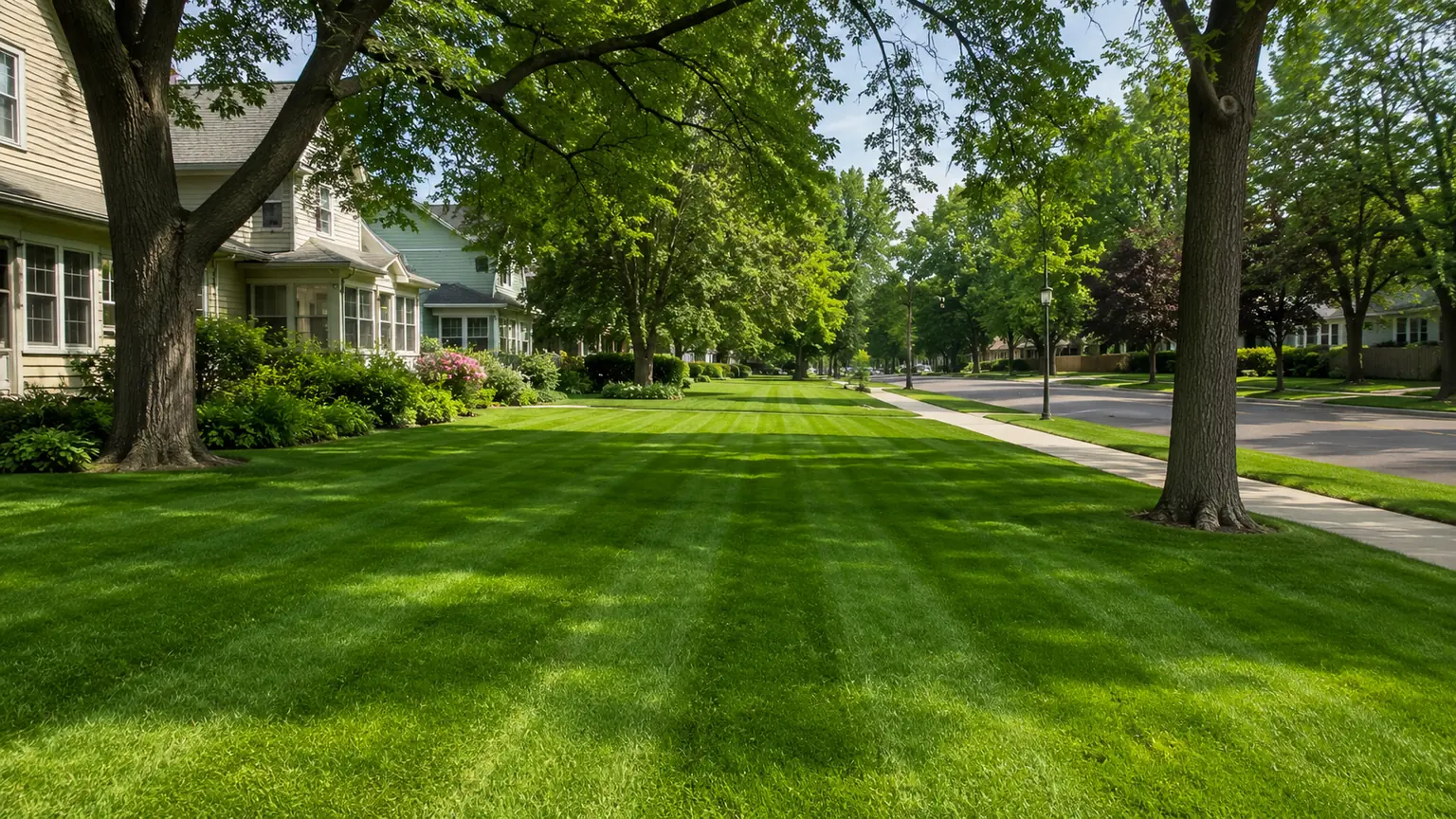
For example, mature canopy gives many streets a distinct character, yet shade and leaf volume affect the lawn beneath it. Roots compete for moisture, low branches reduce clearance, and wet leaves can remain matted in protected corners. Other properties are younger or more exposed, with faster spring growth and greater summer drying. Good care recognizes both conditions.
The city’s public works information covers streets, parks, water, and stormwater. Home and business owners still remain responsible for their own grounds, and private work should respect drainage paths, public walks, boulevards, and access. Keeping clippings and material out of the street is a small but meaningful part of orderly service.
Jason’s Lawn Care serves Saint Peter as part of an established Greater Mankato route. We bring regional experience with cool-season turf and southern Minnesota weather, then apply it to the individual address. That combination is more dependable than either a generic program or a recommendation based on neighborhood assumptions alone.
Care that supports the people using the site
Saint Peter Lawn Care for Homes, Rentals, and Businesses
Although appearance matters everywhere, the purpose behind it changes. We listen for the operational and everyday-life details that should shape the schedule.
Residential Landscapes
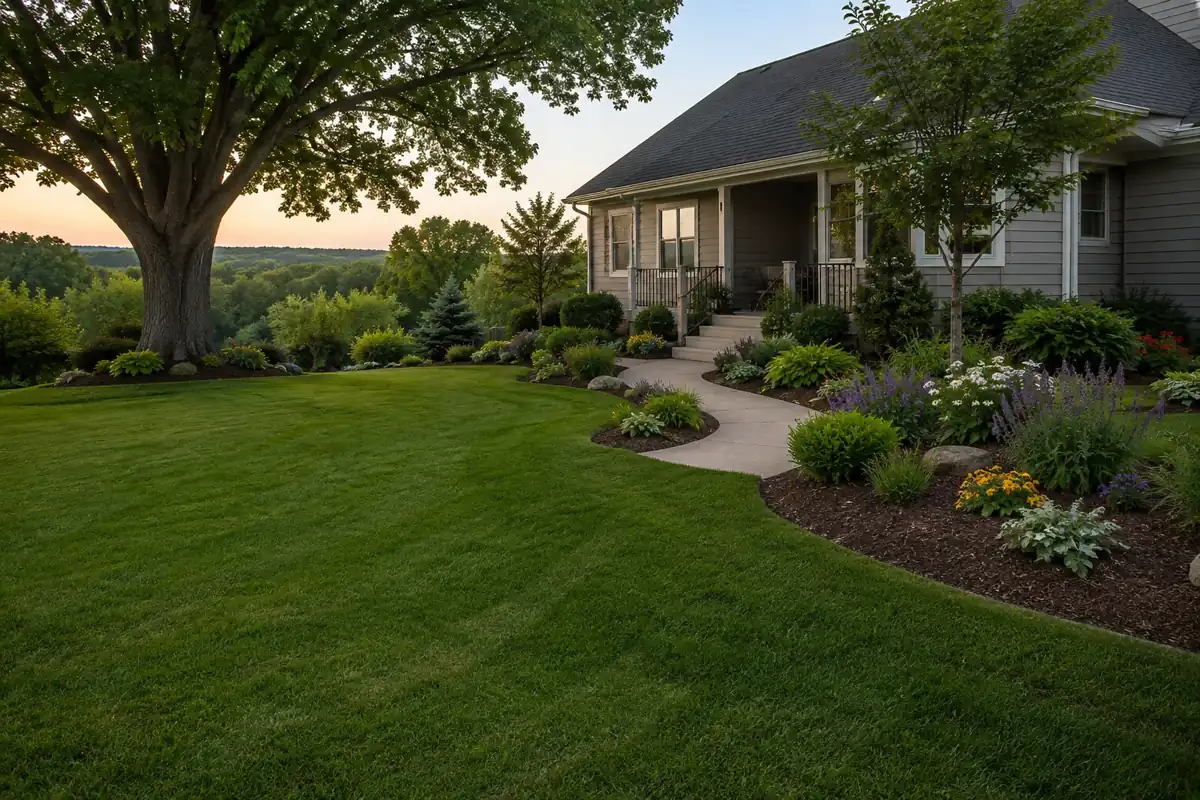
In many cases, a residential yard serves as play space, gathering space, garden setting, pet area, and the first view of the home. Regular mowing keeps the baseline orderly. Seasonal cleanup removes concentrated work, while tree, turf, or landscape material services address specific needs as the site matures. Owners choose the level of help that actually improves daily life.
Business and Managed Property
Meanwhile, commercial grounds need to remain presentable without interfering with customers, employees, tenants, or deliveries. We coordinate access and timing, pay attention to signage and parking, and discuss winter needs before snow affects operations. A familiar local contact gives managers a clearer way to plan across multiple seasons.
Care that follows the rhythm of the site
Working With the Landscape Through a Minnesota Year
In fact, each season leaves work for the next one. Timely care prevents those tasks from piling up and keeps the site ready for everyday use.
Spring Reopening
After snowmelt, yards can hold branches, matted leaves, sand, gravel, and material moved by plowing or wind. Spring cleanup opens lawns and beds, clears practical travel areas, and reveals damage that was hidden. Regular mowing begins after turf is actively growing and the ground can carry equipment without avoidable harm.
Summer Living
At the same time, summer turns the yard into an extension of the home or business. Weekly mowing keeps it ready for children, pets, visitors, tenants, or customers. The cut should preserve turf health during heat, and trimming should maintain clear transitions around gathering spaces, walks, plantings, and structures.
Autumn Canopy
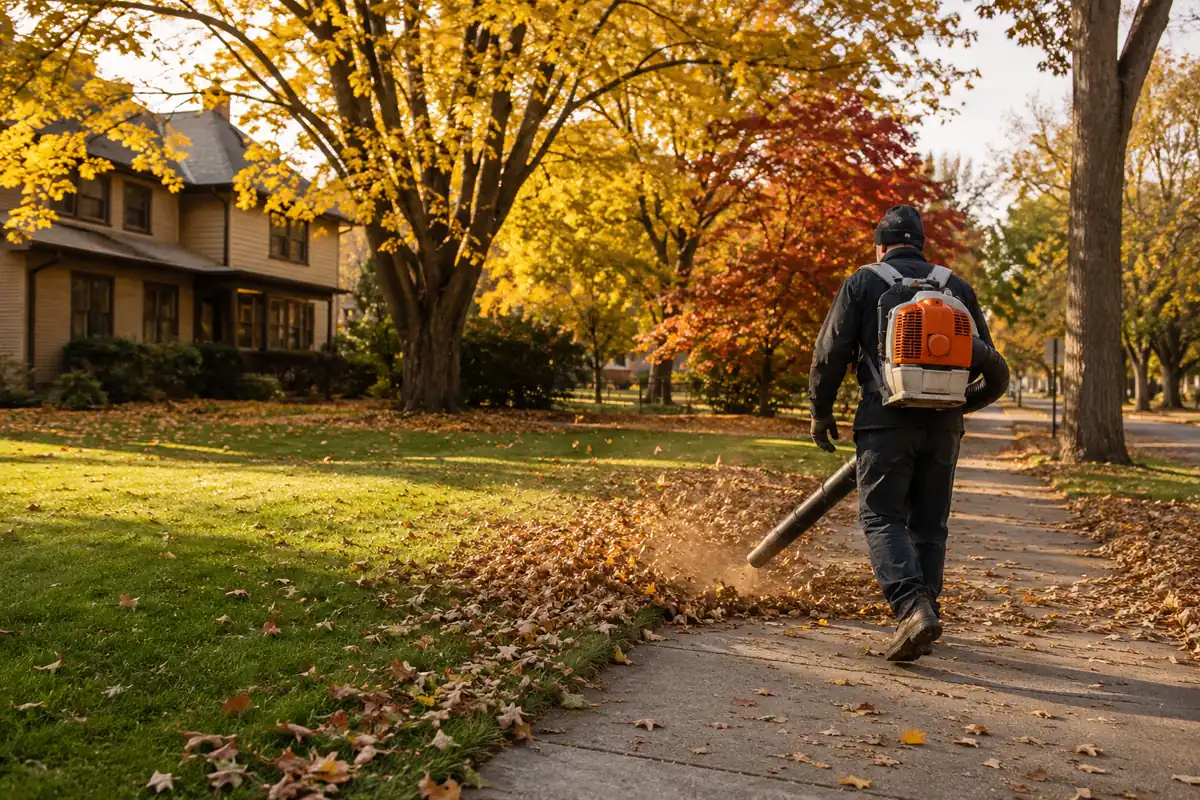
So, tree-lined properties can accumulate leaves faster than owners can keep pace. Cleanup protects grass from dense, wet cover and restores visibility along beds and edges. Fall also provides a strategic time for aeration when compacted cool-season turf is still growing and moisture supports recovery.
Winter Connection
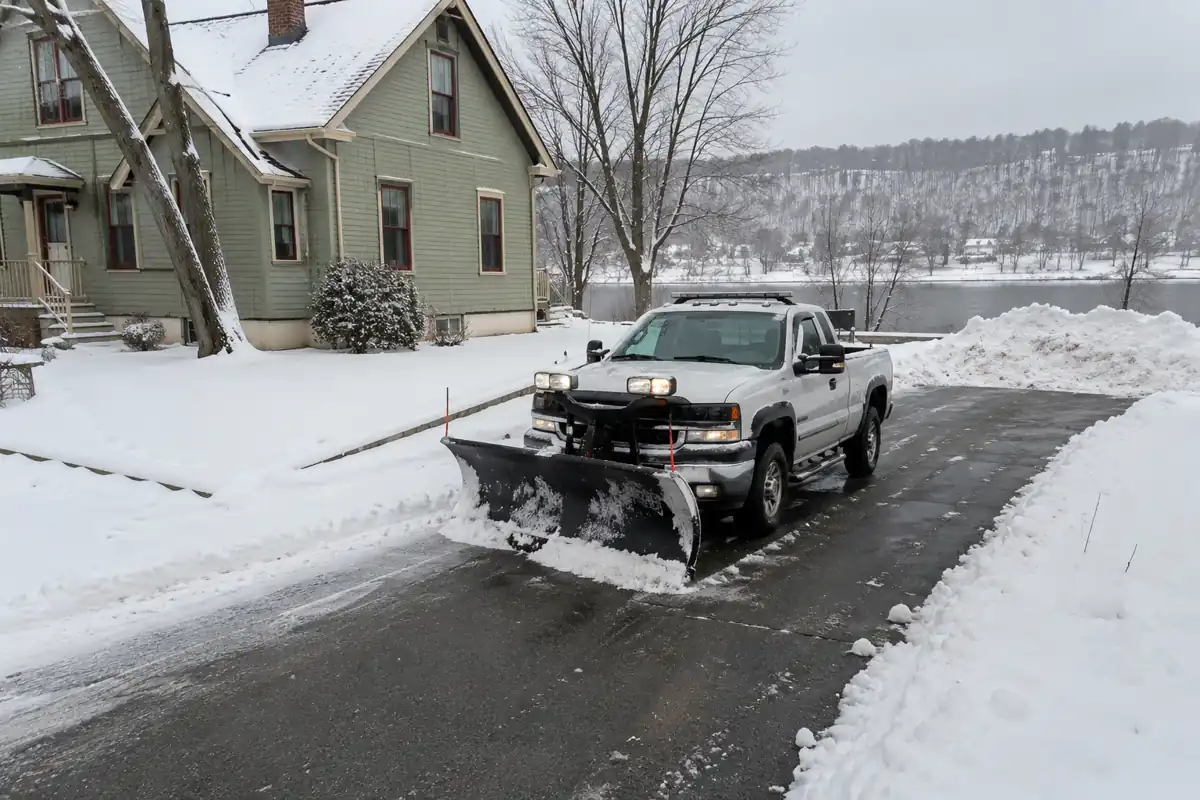
Driveways, parking, walks, and entrances become the focus after snowfall. We plan equipment access and stacking locations while considering parked vehicles, retaining features, landscaping, and the routes people actually use. Defining those needs in advance makes winter service more predictable.
Regular care plus well-timed seasonal help
Saint Peter Lawn Care Services for the Complete Property
After all, turf is only one part of an outdoor space. Trees, planting beds, leaves, material, traffic, and winter access all influence how the site looks and functions.
A weekly visit that keeps the whole yard in order
Saint Peter Lawn Care and Regular Mowing Around Mature Features
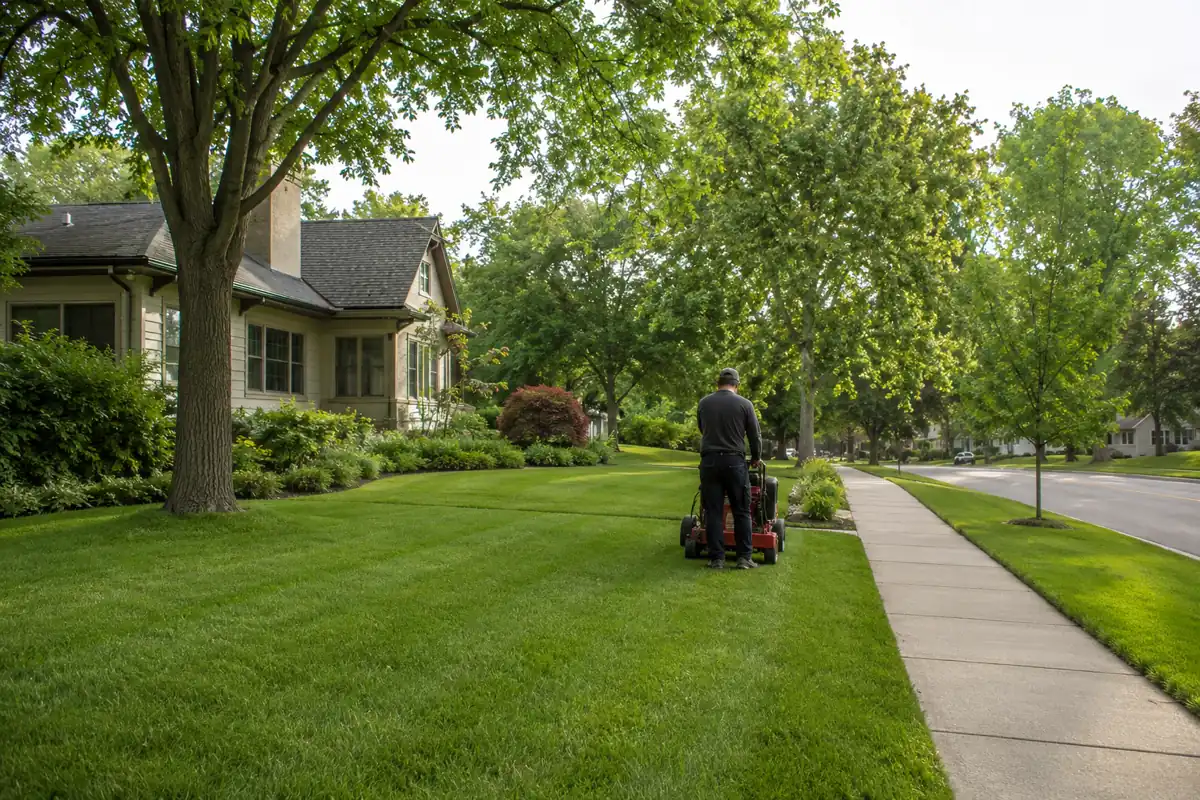
First, older turf benefits from regularity. When grass is allowed to grow too tall between cuts, the next visit removes too much leaf tissue, leaves heavier clippings, and creates an uneven appearance. Weekly service keeps growth manageable. Trimming around trees, fences, steps, posts, and beds then brings definition to the parts a mower cannot finish.
For example, Saint Peter yards often include mature shade and root systems that influence the lawn below. Grass under canopy may grow slowly, stay damp after rain, or thin where roots compete for moisture. Open lawns can behave in the opposite way, growing quickly in spring and drying in summer sun. We adjust the cut to the lawn instead of using one height as a permanent setting.
Beyond that, homes with children, pets, gardens, or frequent gatherings need a service routine that respects how the yard is used. Customers should clear toys, hoses, pet waste, portable furniture, and other movable items before arrival. We also document gates, irrigation components, invisible fences, new plantings, and soft areas so the visit becomes smoother after the first week.
However, rain can interrupt even a well-planned route. If soil is saturated, equipment may create ruts or compress the root zone. Waiting for a safer surface protects the lawn and usually produces a better cut. We communicate those adjustments and return when the ground is ready instead of damaging the yard to meet an artificial deadline.
Respect for the landscape and the customer
Respectful Saint Peter Lawn Care on Occupied Properties
A polished result depends on the work itself and on how the crew moves through an occupied property. Preparation and updates protect both.
Work Around Established Features
Mature properties accumulate details: trees, roots, edging, gardens, steps, narrow gates, play equipment, utilities, old planting beds, and drainage changes. We identify the features that affect equipment access and make deliberate choices around them. Customers help by pointing out hidden or sensitive items and by keeping movable obstacles outside the work area.
Use Conditions Instead of Habit
However, a calendar is only a guide. The weather and ground decide whether a sensitive job should proceed. Saturated soil can be damaged by mowing. Dry, hard ground may not be ready for aeration. Leaf cleanup may be premature before the dominant canopy drops. Our schedule maintains dependable routes while leaving room for the judgment needed to protect the result.
Explain the Expected Outcome
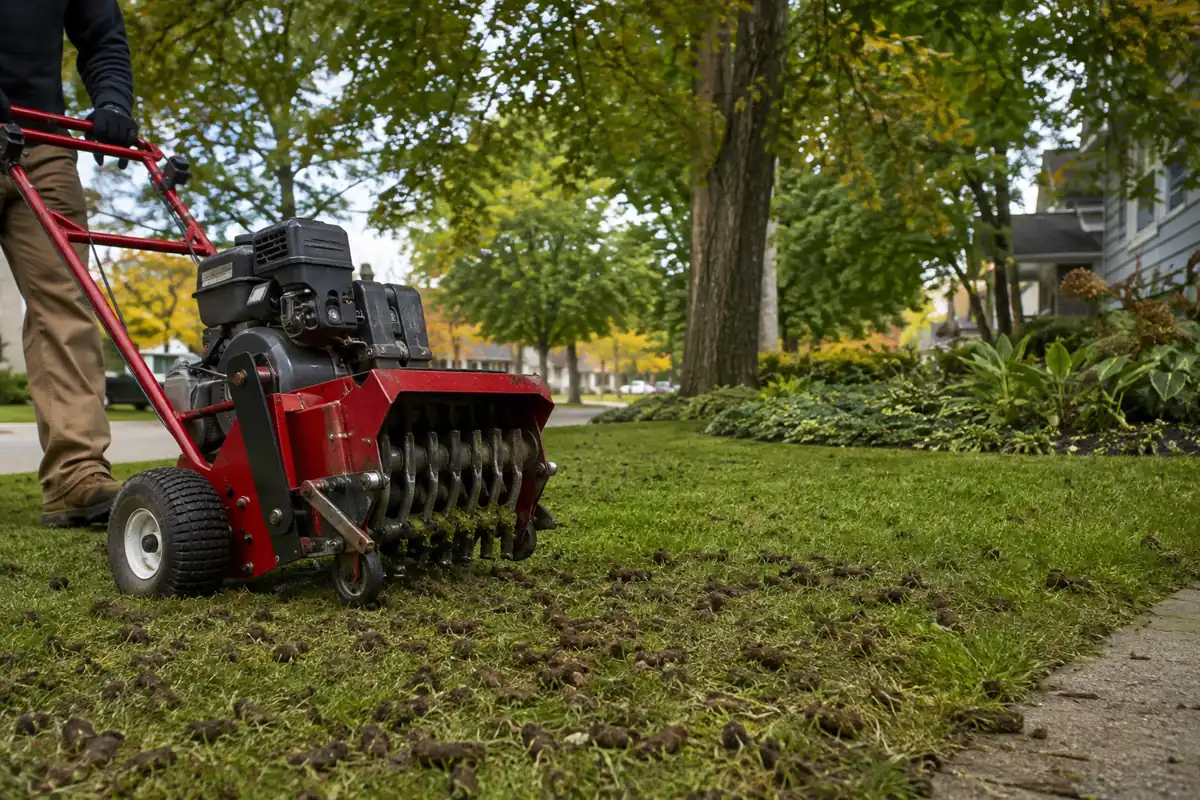
In the end, the customer should understand what will look different after service. Mowing creates immediate order, whereas aeration leaves visible plugs and needs recovery time. Dethatching can expose the surface before turf rebounds. Fresh mulch changes bed depth and edges. Snow service creates access but also requires storage space. Clear expectations make each service easier to judge.
Support the lawn where growth begins
Saint Peter Lawn Care for Older or Heavily Used Turf
Over time, mature lawns can carry years of foot traffic, mower travel, play, and soil settling. Compaction is easy to overlook because it happens below the surface. As pore space disappears, rain may soak slowly or move away, and grass roots may remain shallow. Core aeration removes small plugs through the compressed layer and creates openings that support water, air, and root movement.
By contrast, thatch is not the same condition. It is a layer of organic stems and roots that develops between green growth and mineral soil. Some is normal and useful. When it becomes excessive, however, the surface may feel spongy and irrigation may fail to reach the root zone evenly. Dethatching removes that surplus material, so it should be used only after the layer is checked.
At the same time, shade, tree roots, and concentrated activity can produce thin turf even when compaction or thatch is not the primary issue. Aerating a lawn cannot create sunlight, and dethatching cannot eliminate wear from a repeated play path. We explain those limits and focus on the correction that fits the likely cause. Sometimes a change in traffic, mowing height, or expectations is more useful than another machine pass.
That means late summer through early fall often gives cool-season grass an opportunity to recover from root-zone work. Exact timing still depends on moisture and weather. The University of Minnesota Extension lawn care calendar is a useful statewide reference, while the site review guides the local decision.
Choose work that makes the site more usable
A Seasonal Saint Peter Lawn Care Plan for Turf, Trees, Leaves, and Snow
A worthwhile plan starts with the weekly task that creates consistency, then schedules corrective and seasonal work when the lawn can benefit.
Protect the Weekly Baseline
Weekly mowing controls growth, but the baseline includes the details around it. Trimming should preserve a clean line without damaging trunks or bed edges. Clippings belong off walks and paved areas. Equipment should avoid saturated routes and repeated turns in one soft location. These habits make a greater long-term difference than forcing an unusually short cut.
Homeowners can support the routine by monitoring irrigation and recent rainfall. Shade and sun should not receive identical assumptions. A sunny front lawn may dry while a protected back yard still holds moisture. Watering decisions should follow the actual soil, and mowing height should help grass shade its own root zone during heat.
Address Roots, Thatch, and Canopy Honestly
When turf thins under trees, root competition and limited light may matter more than compaction. When a play route or frequently traveled strip thins, wear may be the dominant cause. Aeration can improve compacted soil, and dethatching can remove a heavy organic barrier, but neither replaces sunlight or eliminates repeated traffic. Correct diagnosis protects the customer from unrealistic expectations.
Tree trimming can improve practical clearance and remove problem growth around the usable property. It should not be used to strip a healthy canopy in an attempt to force full-sun turf conditions. Where shade is persistent, a different groundcover, bed, or expectation may be more sustainable. We can maintain the serviceable lawn while being candid about limits.
Connect Cleanup and Winter Preparation
Spring cleanup clears the residue of snow and reveals what needs attention before outdoor use increases. Fall cleanup protects turf and makes drives, beds, and edges easier to identify before snow. Material installation between those transitions should account for plant health, drainage, and future upkeep, so the new material does not become a decorative obstacle.
Winter planning completes the cycle. Homeowners should identify the driveway width and most important walk connection. Managers should define parking, entrance, and delivery needs. Delicate edges, drainage structures, and snow-storage locations need to be visible to the service provider before accumulation. A clear plan protects access and reduces unnecessary contact during each storm.
Simple coordination from a nearby team
Building a Routine Around the Address
Property care should not require a new explanation every visit. We gather the important details, establish a workable schedule, and keep the plan current as use and weather change.
Begin With Use, Access, and Needs
We ask how the site functions before discussing every available service. A family yard may need a reliable mowing day and awareness of fenced pet space. A rental may require updates with a manager. A business may need work sequenced around customers or deliveries. Those facts determine whether the service can be completed efficiently.
The initial review also covers physical conditions: gates, slopes, trees, drainage, utilities, parking, recent seeding, and regular soft spots. For winter work, we identify the travel lane and storage. For material installation, we consider delivery and containment. Accurate site information reduces surprises for both the customer and crew.
Let Familiarity Improve the Plan
Over time, repeat visits create a useful property record. The crew can see where leaves collect, where turf wears, which bed loses material, and how long shaded areas stay wet. We share relevant observations without assuming every issue requires an immediate purchase. Sometimes the best response is to watch a pattern through another weather cycle.
When action is appropriate, familiarity makes the recommendation more specific. Cleanup can be timed to the actual trees, aeration can target compacted sections, and winter needs can reflect how the site operated during the last storm. The service relationship becomes easier because the address no longer starts as an unknown each season.
Enjoy the site instead of always maintaining it
Get Saint Peter Lawn Care Built Around Your Needs
Your lawn, trees, beds, leaves, and winter access all compete for time. Jason’s Lawn Care can handle weekly mowing and add aeration, dethatching, cleanup, tree trimming, landscape materials, hauling, or snow service when the site needs it. Tell us what you want to accomplish, and we will recommend a straightforward starting point.