
One local team, every visible season
Commercial and Residential Services Built Around the Property
Commercial and Residential Services should solve the work that a property actually needs, not force every lawn, landscape, and winter route into the same package.
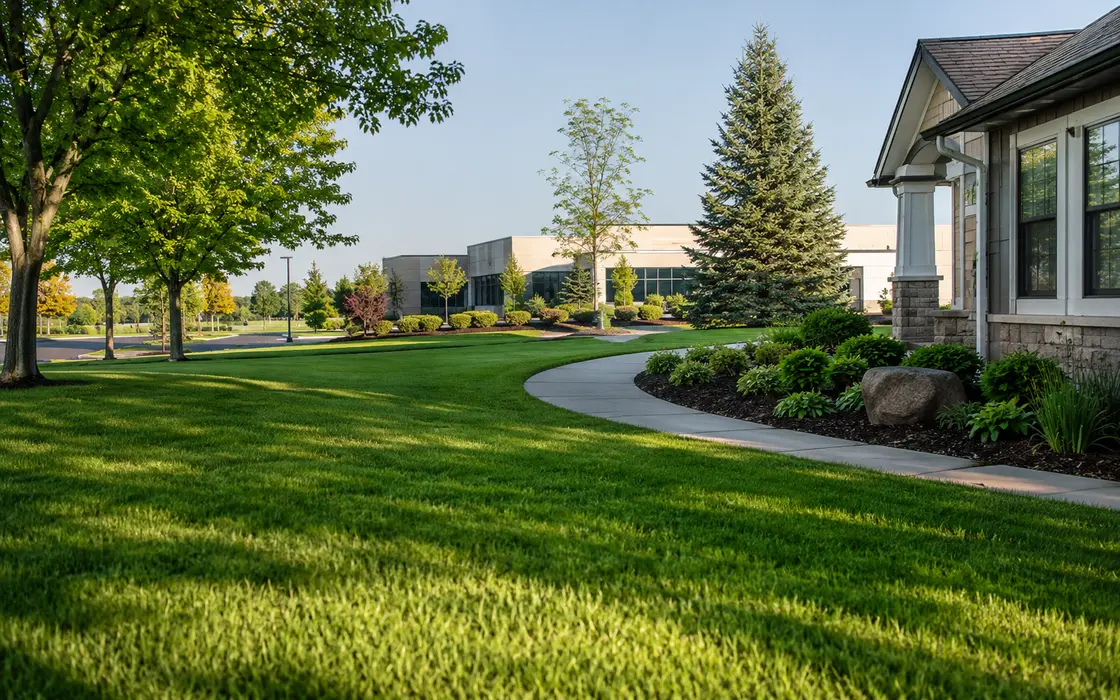
Jason’s Lawn Care provides coordinated outdoor property care for Greater Mankato homes, rental properties, offices, shops, associations, and other locally managed sites. In addition, more than 20 years of local experience helps our team recognize how Minnesota weather, mature trees, compacted soil, narrow access, visible entrances, and seasonal transitions change the work from one property to another.
Some customers need reliable weekly mowing. Others call because water is no longer reaching the soil, tree limbs are interfering with the usable space, a planting bed needs a durable new finish, or snow storage has become an access problem. Therefore, our first goal is to understand the property, the priority areas, and the result the owner wants to maintain.
The service options below are organized so you can review the right work without digging through unrelated information. Each link opens a complete service page with more detail about timing, preparation, and the standards that shape the visit.
Start with the work in front of you
Choose a Service
Open the detailed page for the service you are considering. Every option below is available for residential or commercial properties when the site and scope are a practical match.
The property is one connected system
Outdoor Care Works Better When Every Service Has a Reason
A clean property is not created by doing everything. It comes from choosing the right work, in the right area, at a time when the site can benefit.
A lawn, planting bed, tree canopy, walkway, driveway, and drainage route may appear to be separate features. In practice, they affect one another every day. Grass grows differently beneath mature trees. Leaf accumulation changes how quickly a walk becomes slippery. Compacted turf can hold water near an entrance. A snow pile can block a sight line in winter and leave a wet, damaged edge in spring. For that reason, Commercial and Residential Services should be planned with the entire property in view.
Residential customers often notice the details at close range. A ragged edge beside the front walk, an overgrown corner near the patio, or mulch piled too tightly around a plant can make the whole yard feel unfinished. At home, service also has to account for pets, children, gates, irrigation heads, garden areas, and the times when the family wants to use the lawn.
Commercial properties place a different kind of pressure on the landscape. Customers and tenants judge the site from parking areas, entrances, sidewalks, signs, and windows. Meanwhile, delivery routes, snow storage, foot traffic, and limited service windows can narrow the choices available to the crew. A good plan protects access and presentation without interfering with normal business activity.
Jason’s Lawn Care starts by identifying the most visible and most functional areas. We look at what is growing well, what is becoming difficult to maintain, and which seasonal problems repeat. Then the scope can stay focused. A customer who needs mowing does not automatically need every turf treatment, and a business requesting winter service should not receive a vague plan that ignores where the snow can safely go.
That practical approach keeps each recommendation tied to a result. It also makes estimates easier to understand because the work connects to identifiable areas, priorities, and access conditions. As the property changes, the service plan can change with it rather than accumulating unnecessary tasks year after year.

A consistent finish through changing growth
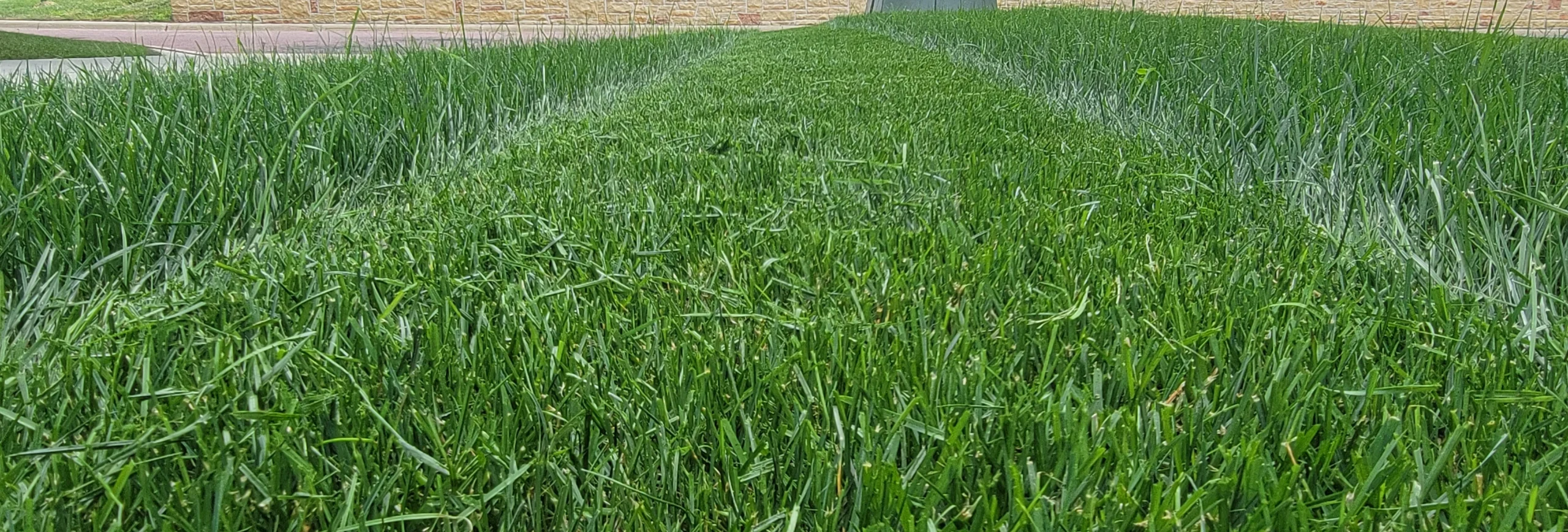
Lawn Mowing for Turf That Looks Intentional
Professional mowing is the service people see most often, yet the best result depends on more than moving across the property on a fixed day. Turf growth changes with rainfall, heat, shade, soil moisture, and the amount removed during the previous visit. Therefore, the cutting height and visit rhythm should follow the lawn instead of forcing a summer rule onto every week of the season.
Our mowing work brings the visible parts of the lawn together. The main turf area should read evenly from the street, while trimming should define the places a larger cutting deck cannot reach. Edging, where appropriate, clarifies the line beside walks and curbs. Finally, clippings should leave hard surfaces clean rather than turning an otherwise finished visit into a trail of debris.
Meanwhile, at a residence, that may mean slowing down around tree roots, garden beds, play areas, downspouts, and narrow side-yard access. On a commercial site, the route may need to protect parked vehicles, storefront entrances, signs, tenant activity, and irrigation zones. In both settings, the work should respect soft soil after heavy rain because rutting can last much longer than a delayed cut.
The University of Minnesota Extension explains that mowing frequency should follow growth rate and that a regular schedule can keep clippings small enough to decompose without creating thatch. That principle supports our focus on steady maintenance, reasonable removal, and an even distribution of fine clippings when site conditions allow.
- Season-aware cutting height and frequency
- Trimming around fixed features and narrow transitions
- Edging where the site calls for a defined boundary
- Final clearing of walks, drives, and visible hard surfaces
Two turf problems that need different answers
Open the Lawn at the Correct Layer
A spongy organic layer and hard compacted soil can both interfere with water movement, but they are not the same condition. Dethatching works near the crown and soil surface; core aeration reaches into the soil. Choosing between them begins with the layer that is actually limiting the turf.

When organic buildup becomes a barrier
Dethatching
Thatch is the woven layer of stems, roots, and partially decomposed material between green growth and the soil. A modest amount can protect the crown. However, an excessive layer may keep water near the surface, reduce soil contact, and make the turf feel unusually soft underfoot.
We do not treat loose leaves or visible clippings as proof that the lawn needs aggressive power raking. Instead, the layer should be checked below the green canopy. Turf density, current stress, recent weather, and the amount of growing season left all influence whether removal makes sense and how much disruption the lawn can recover from.
For instance, residential lawns may show the problem in sunny, heavily fertilized sections while shaded areas remain thin. Commercial turf may develop inconsistent zones because irrigation, traffic, and maintenance history vary across the site. Selective judgment matters more than applying one depth everywhere.
When traffic and soil density restrict the roots
Lawn Aeration
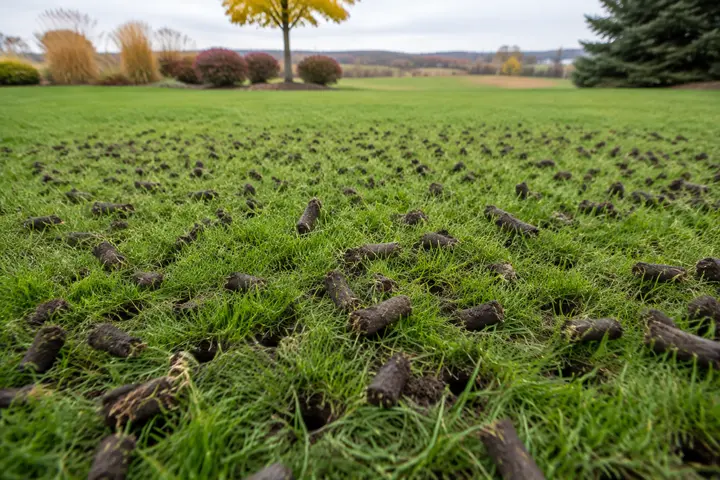
Core aeration removes small plugs of soil and turf so air, water, and roots have new pathways through compacted ground. The visible plugs are evidence that material came out of the soil rather than a machine simply poking narrow holes that close quickly.
Compaction often follows use. For example, at homes, common pressure points include the route from a gate to the patio, play areas, pet paths, and the strip beside a driveway. Commercial properties may show firmer soil near entrances, signs, parking transitions, gathering areas, and repeated maintenance routes. Those zones deserve more attention than lightly used corners.
Moisture is critical. Soil should be soft enough for useful core depth but not so wet that traffic smears or ruts the surface. Afterward, the cores can dry and break down naturally, returning soil to the canopy while the openings support infiltration and root activity.
Structure, clearance, and natural form
Tree Trimming That Respects the Canopy
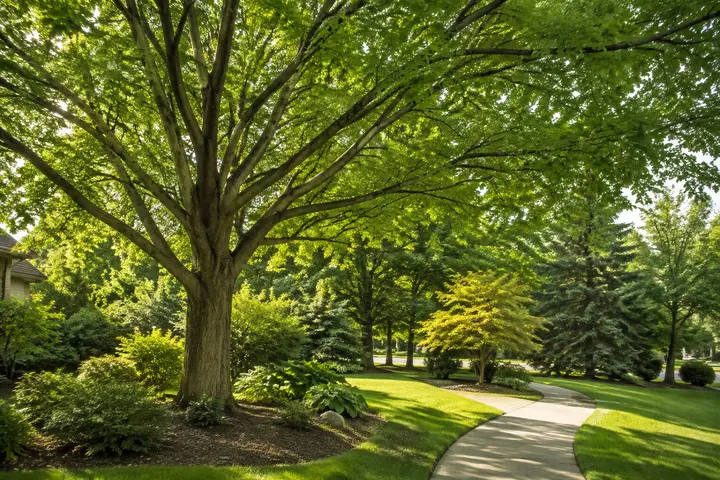
A mature tree shapes far more than the view above the lawn. Its shade influences turf density and snowmelt, its roots affect grade and mowing access, and its branches can narrow the space around walks, drives, roofs, signs, and parked vehicles. Thoughtful trimming begins by identifying which relationship needs improvement rather than cutting simply because a branch is reachable.
Dead, damaged, crossed, or poorly placed limbs may deserve attention for different reasons. Some cuts improve clearance, while others reduce rubbing or preserve a stronger branch structure. In addition, the branch collar and final cut location matter because an unnecessary stub or a flush cut can interfere with the tree’s natural response. Just as important, removing too much live canopy at once can create stress and weak regrowth.
Residential work often balances shade, roof clearance, garden light, and the way a family moves through the yard. Commercial tree care may place additional emphasis on entrances, signs, parking-lot visibility, delivery routes, and a consistent presentation from the street. In either case, the finished tree should still look like its species and age, not like a geometric object forced into an artificial outline.
Timing also depends on species and health. For example, the University of Minnesota Extension warns against pruning oaks during the highest-risk spring and early-summer period. A responsible plan accounts for that kind of biological constraint before appearance or convenience.
Our standard: remove with purpose, protect the branch structure, create useful clearance, and stop before the canopy loses its natural balance.
The two transitions that shape the season
Spring and Fall Clean-Up With Different Priorities
Spring service should reveal the property without working saturated soil too aggressively. Fall service should manage leaf volume and access before winter closes the season. Treating them as mirror images misses the conditions that make each visit useful.
After snowmelt, before active growth
Spring Clean-Up
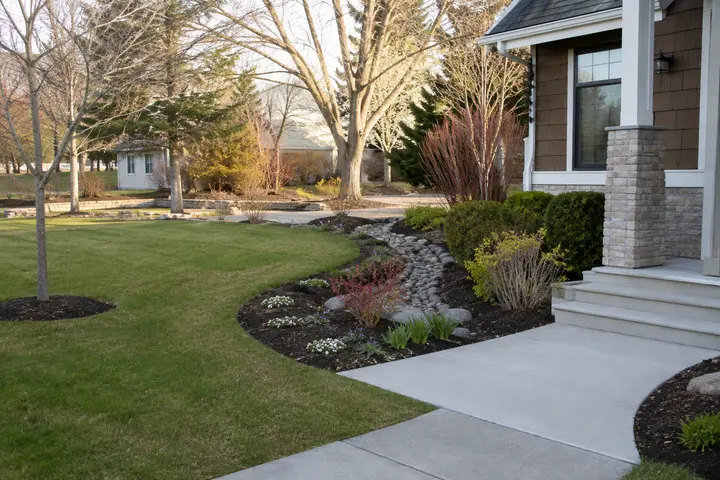
Winter can leave matted turf, broken twigs, windblown litter, displaced bed material, and debris collected along curbs or drainage paths. A useful spring visit opens those areas gradually. The lawn needs enough firmness to handle foot traffic without smearing soft soil or compressing the root zone.
For example, at a home, the work may focus on the front walk, foundation beds, patio approaches, and the patches where snow lingered. By contrast, a commercial site may need extra attention at customer entrances, parking islands, sign beds, and the edges that received plowed snow. Salt residue, gravel, and compacted piles can make those zones recover later than the rest of the property.
The goal is not to scrape every natural remnant from the landscape. It is to restore airflow around turf, uncover the intended bed boundaries, reopen drainage, and leave hard surfaces ready for regular use. Once the property is visible again, the next maintenance decision becomes much easier to make.

Manage leaf movement before winter locks it down
Fall Clean-Up
Autumn work is shaped by volume, moisture, and timing. A light layer of dry leaves behaves differently from a wet mat pressed into long turf. Meanwhile, wind can refill an entrance or property edge after an early visit. For that reason, the route and timing should reflect the actual drop pattern rather than a single date selected months in advance.
Similarly, residential priorities often include open walks, tidy beds, usable patios, and turf that will not spend winter beneath a dense leaf mat. In addition, commercial properties add visibility and access concerns near doors, curbs, signs, parking areas, and storm drains. A clear site is easier to manage when snow begins, but leaf removal still needs sensible destinations and efficient hauling.
Final presentation matters. The crew should not move one problem from the lawn onto the street, a neighboring property, or a drainage route. Instead, the visit should leave defined boundaries, clear hard surfaces, and a property prepared for the first sustained snow.

A bed finish should support the landscape beneath it
Rock and Mulch Installation With Clean Depth and Grade
Fresh material can transform a planting bed quickly, but the appearance only holds when preparation comes first. Existing weeds, compacted debris, buried landscape fabric, broken edging, and an uneven grade do not disappear because new mulch or rock covers them. If those conditions remain, the bed may look finished for a short time while drainage and maintenance problems continue underneath.
Material choice should follow the site. For instance, organic mulch can soften a residential planting, moderate surface moisture, and create a natural transition around shrubs and perennials. Decorative rock can make sense where durability, runoff, wind exposure, or a specific architectural relationship is more important. Neither choice belongs everywhere, and mixing materials without a clear boundary often creates a maintenance line that drifts into the turf.
Installation depth matters as well. Too little material may fail to produce an even visual surface. Too much can bury edging, raise the grade against siding, trap moisture around stems, or send material onto the walk after heavy rain. We maintain clearance around trunks and plant crowns, respect drainage direction, and use the existing property elevations rather than building a mound that fights the site.
Residential projects often concentrate on foundation beds, tree rings, mailbox areas, and the transitions around patios or walks. Commercial work may involve larger volumes, parking islands, sign beds, entrance landscapes, and hauling logistics. In both cases, the final edge should be deliberate, the material should remain inside its intended area, and cleanup should be part of the installation rather than a separate concern.
- Preparation before new material arrives
- Material and depth selected for the location
- Clearance around trunks, stems, siding, and drains
- Hauling, placement, edging, and final hard-surface cleanup
Winter access begins with decisions made before the storm
Snow Removal and Plowing With a Defined Route
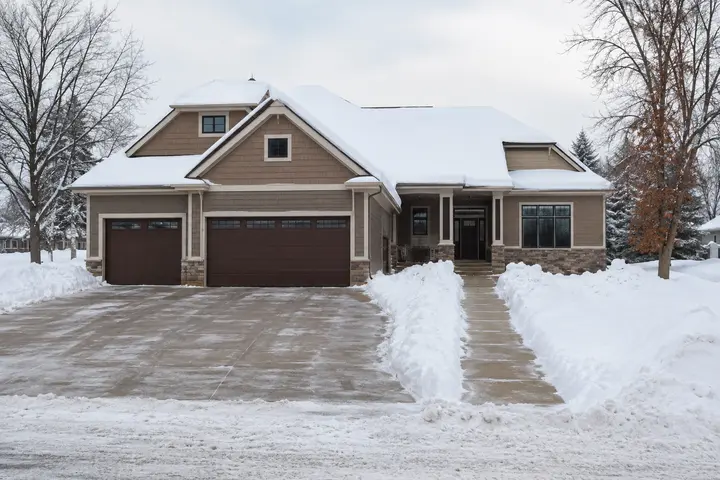
Snow service works best when priority areas, hidden edges, and storage locations are clear before visibility drops. A driveway opening, customer entrance, pedestrian route, loading area, or shared parking access may all matter, but they do not carry the same urgency. Identifying the order of work helps the property remain functional instead of relying on improvised decisions during every storm.
Snow placement is part of the service, not an afterthought. A pile that blocks a sign, narrows a sight line, buries a drain, or melts across a primary walk can create a second problem days after the route was opened. The available storage area also shrinks as winter continues. Consequently, a practical plan leaves room for later storms and avoids pushing material into places that interfere with public roads or neighboring property.
For example, residential service often centers on the garage approach, driveway opening, front walk, and the route people use to reach vehicles or deliveries. In addition, commercial properties may add tenant entrances, customer parking, waste areas, delivery zones, accessible routes, and specific opening times. Markers can help define curbs, pavement edges, islands, and low features that disappear under drifting snow.
Conditions vary within the same storm. Wind may refill an exposed area, compacted traffic can change the surface, and municipal plows can leave a dense ridge at the road after the main drive was cleared. Expectations should account for those changes rather than assuming every event will produce the same sequence or finish.
The Minnesota Department of Transportation provides driveway-clearing guidance that emphasizes snow storage and roadside visibility. Those same ideas support a safer private route: keep entrances recognizable, maintain useful sight lines, and place snow where it will cause fewer problems as it melts or drifts.
Before winter: define priority access, mark hidden boundaries, identify acceptable snow storage, and explain any timing requirements tied to the property.
The same quality standard, adapted to different use
How Commercial and Residential Services Change With the Site
The work should look deliberate in either setting, but scheduling, access, communication, and risk points differ. A clear estimate names those differences so the customer knows what the crew can address and what must remain accessible.
Residential Property Care
Home service is personal because the work surrounds daily life. Gates, pets, children, gardens, irrigation, outdoor furniture, invisible fencing, and neighborhood expectations can all affect access. Before a visit, owners should identify hidden or sensitive features and keep the work route clear enough for a safe, efficient approach.
Residential priorities often begin at the front of the property but continue through side yards and private outdoor spaces. A lawn can look excellent from the street while a narrow gate, shaded corner, patio transition, or downspout area needs a different treatment. We account for those changes rather than assuming visibility equals uniform conditions.
Communication matters when weather alters the schedule or a planned service should wait. Wet soil, active turf stress, leaf drop, and storm timing do not follow a perfect calendar. A condition-based delay can protect the property from ruts, tearing, compaction, or an incomplete result. The customer should understand why that decision supports the lawn or landscape.
Most importantly, the scope should fit the owner’s goals. Some homeowners want dependable recurring maintenance; others need help with a seasonal reset or a one-time landscape improvement. Commercial and Residential Services can share the same craftsmanship without becoming the same package.
Commercial Property Care
Commercial sites are judged through movement. People see the landscape while entering from the road, parking, walking to the door, waiting near a sign, or looking through a window. Those sight lines identify the areas where clean edges, open access, and consistent presentation carry the greatest value.
Operations add another layer. The crew may need to work around delivery times, tenant schedules, parked vehicles, public sidewalks, waste collection, irrigation cycles, and limited snow storage. A useful service plan identifies those constraints early so routine work does not create unnecessary conflict with the business using the property.
Commercial estimates also benefit from clear responsibility. The owner or manager should know which turf, beds, trees, walks, and winter routes are included. If a property has shared boundaries or multiple entrances, the priority order should be written in practical language. That clarity reduces missed areas and makes future adjustments easier to discuss.
Jason’s Lawn Care brings a local owner-operated perspective to that coordination. We focus on reliable communication, visible completion, and a scope the property manager can review. The goal is not a generic grounds package. It is a maintained site that supports the customers, tenants, employees, and owners who rely on it.
Details connect one visit to the next
A Year-Round Property Plan Should Stay Understandable
Outdoor service changes with the season, but the planning process can remain clear. Start with the places that must stay usable and presentable. Then identify the recurring work, the seasonal work, and the conditions that would cause a visit to change. This creates a plan that can respond to weather without becoming vague.
For turf, that may mean mowing through active growth, monitoring compaction, and deciding whether aeration or dethatching addresses a real limitation. For landscape areas, it may mean preserving bed edges, refreshing material at an appropriate depth, and trimming trees when the species and objective support the work. During transition seasons, cleanup should prepare the property for what comes next rather than simply removing everything in sight.
Winter planning brings those decisions back to access. The driveway, entrance, walk, and snow-storage areas should remain connected. When spring returns, damage near those routes can be evaluated before regular maintenance resumes. In this way, each season supplies information for the next one.
Commercial and Residential Services also work better when customers share changes early. New irrigation, construction, fencing, pets, tenant use, landscaping, parking patterns, or drainage work can affect the route. A quick update protects hidden features and keeps the estimate aligned with the property as it exists now.
- A clearly defined work area and access route
- Service timing tied to weather and site conditions
- Visible completion at walks, curbs, beds, and entrances
- Communication when the property or priority changes
- Recommendations based on need instead of automatic add-ons
Tell us what the property needs to do
Request a Commercial or Residential Service Estimate
Share the address, the service you are considering, the areas that matter most, and any access or scheduling details we should know. Jason’s Lawn Care will review the request and help define a practical scope for your Greater Mankato property.