

Material belongs in a plan, not simply a pile
Rock and Mulch Installation With Clean Depth and Edges
Rock and Mulch Installation should improve the way a landscape functions as well as the way the bed looks from the curb.
Fresh material can unify planting beds, reduce exposed soil, protect roots, and make maintenance boundaries easier to read. Yet a good result depends on more than color. Existing depth, plant crowns, tree trunks, drainage, edging, fabric, delivery access, and the way material will be hauled across the property all affect the final surface.
Jason’s Lawn Care reviews those conditions before material moves. We consider what is already in the bed, where excess needs to leave, how the grade carries water, and which route protects the lawn and hardscape. Therefore, the estimate covers a defined installation rather than an unspecified load dropped at the edge of the property.
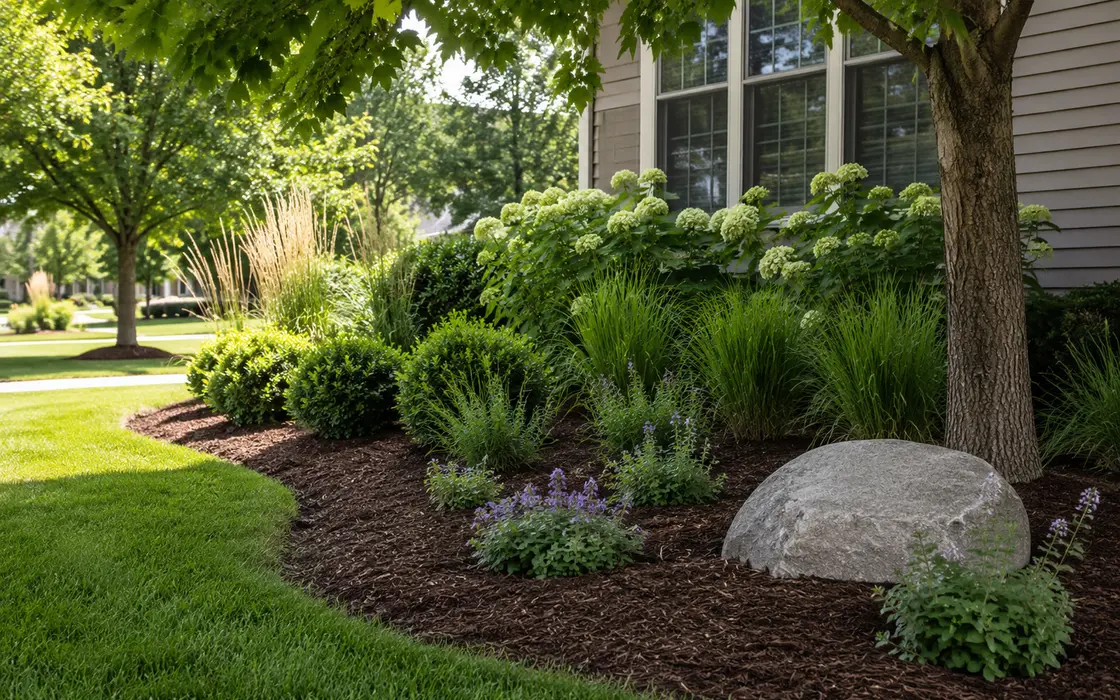
Build the finish from the soil upward
The Details That Make Material Installation Last
A durable bed comes from preparation, measured placement, clear boundaries, and an honest plan for excess material. Each decision affects how the surface settles and how easy the landscape will be to maintain.
Prepare the Existing Bed
Loose debris, weeds, displaced edging, and uneven old material are addressed before the new layer arrives. Preparation keeps hidden problems from telegraphing through the finish.
Set Appropriate Depth
More is not automatically better. Material should cover the soil consistently without burying trunks, stems, crowns, or the intended grade around structures.
Protect Edges and Drainage
Bed lines hold the visual shape, while grade and open drainage paths protect the property. We avoid letting the new surface bridge over curbs, drains, or foundation details.
Plan Hauling and Cleanup
Delivery, wheel routes, excess removal, and final sweeping belong in the scope from the start. A finished bed should not leave a second project on the driveway.

Organic and mineral surfaces behave differently
Choose Mulch or Rock for the Site, Not the Trend
Organic mulch gradually decomposes, contributes material to the soil surface, and moderates moisture and temperature around many plantings. Because it changes over time, it needs periodic renewal rather than endless layers stacked on top. Rock lasts differently, handles wind well, and can fit selected architectural or drainage areas, yet it also stores heat and can migrate into soil without a suitable separator.
The surrounding plants and structure should guide the choice. A shaded shrub bed has different needs from a sunny foundation strip, downspout route, utility area, or decorative border. Meanwhile, color and stone size affect maintenance because lightweight pieces, sharp aggregate, and rounded rock do not move or collect debris in the same way.
The University of Minnesota Extension’s mulching guidance recommends keeping mulch away from trunks and using a measured organic layer over the root area. That principle matters in every installation: the material should support plants, not pile against living bark for a dramatic but harmful mound.
The best detail is where materials meet
Edges, Plant Clearance, and Grade Define the Finished Bed
A broad area of attractive material can still look unfinished when it spills into turf, climbs above a walk, or buries the base of a shrub. Transitions carry the design. Therefore, we read the line where lawn meets bed, bed meets hardscape, and one material changes to another before distributing the final layer.
Plant clearance deserves equal attention. Tree root flares, shrub stems, perennial crowns, and groundcover should remain visible enough to avoid trapped moisture and accidental burial. In addition, siding, vents, window wells, and drainage outlets need clear space so a cosmetic installation does not interfere with the building.
Grade is preserved rather than disguised. New rock or mulch cannot fix a drainage problem simply by covering it, and too much material can redirect water toward the wrong place. When the existing surface needs correction beyond normal preparation, the scope should say so before installation begins.
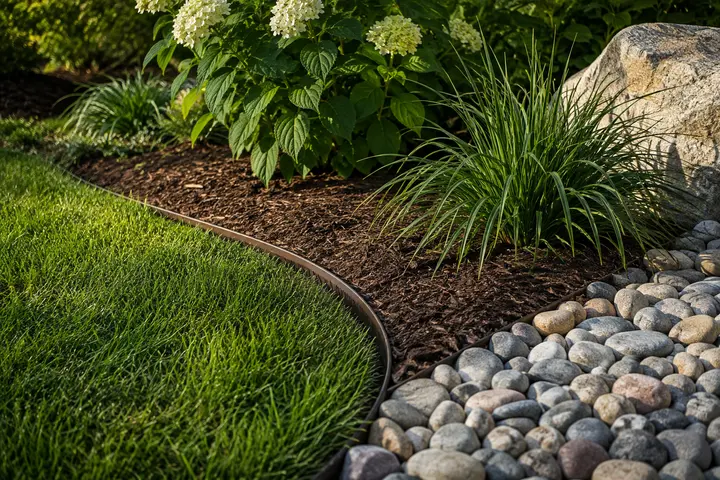
Material use changes with the property
Residential and Commercial Rock and Mulch Installation
Residential beds with close-up detail
Homeowners see their beds from walks, windows, patios, and outdoor living areas, so small inconsistencies become visible. Curved edges, plant spacing, decorative rock, and mulch depth need to feel connected from one viewpoint to the next. As a result, careful hand finishing often matters as much as moving the bulk material.
Residential access can be narrow as well. Gates, steps, fences, slopes, irrigation, pets, and established turf affect how material reaches the bed. Planning that route protects the rest of the property from unnecessary wear.
Commercial beds built for clear presentation
Business and rental properties need durable boundaries around signs, entrances, parking islands, and building foundations. The material should reinforce those high-visibility zones without creating loose spillover onto customer walks or curbs. Therefore, grade and edge control become part of routine property presentation.
Commercial scopes also benefit from clear quantities and disposal expectations. Existing material may need redistribution, removal, or containment before new product arrives. A written plan keeps hauling, installation, and cleanup aligned with the manager’s budget and access requirements.
Measured installation prevents endless buildup
Renew the Surface Without Burying the Landscape
A premium material installation looks deliberate because the depth, edge, plant clearance, and hauling plan all agree with one another.
Adding a fresh layer every year without measuring the existing bed can eventually raise the surface above edging and plant crowns. Mulch may form dense old layers, while rock can disappear into soil or accumulate where runoff moves it. Consequently, evaluation and redistribution may create a better result than simply ordering more material.
Maintenance after installation should match the surface. Organic mulch settles and decomposes. Rock may need occasional leaf removal and edge correction. Even so, neither material eliminates all weeds or maintenance, and no fabric can compensate for poor preparation forever. Clear expectations protect the value of the installation.
Jason’s Lawn Care brings more than 20 years of local property-care experience to the work. We understand how Minnesota freeze-thaw cycles, downpours, snow storage, and seasonal cleanup affect beds. That practical perspective helps us build a finish that belongs to the whole maintenance plan.
Confirm the material and route before delivery
Preparing for Rock and Mulch Installation
Before scheduling, confirm the intended material, color, size, and the exact areas included in the estimate. Point out irrigation, lighting wire, drain tile, utilities, pet fencing, shallow roots, and fragile plants. Also, explain whether existing rock, mulch, edging, or fabric should remain, move, or leave the property.
Open the delivery and hauling route by moving vehicles, furniture, toys, hoses, and portable decorations. If material will stage on a driveway or other hard surface, reserve that space. Finally, discuss access width, gates, steps, steep grades, and cleanup expectations so the installation can proceed without improvising around hidden constraints.
- Approve the materialConfirm type, color, size, and included areas.
- Mark hidden featuresIdentify utilities, drains, roots, and irrigation.
- Open the hauling routeClear vehicles, gates, steps, and staging space.
- Define old materialDecide what stays, moves, or leaves the site.
A finished bed begins with a defined scope
Request a Rock and Mulch Installation Estimate
Tell us which beds need attention, what material you are considering, how crews can access the site, and whether existing material needs hauling. Jason’s Lawn Care will review the details.