
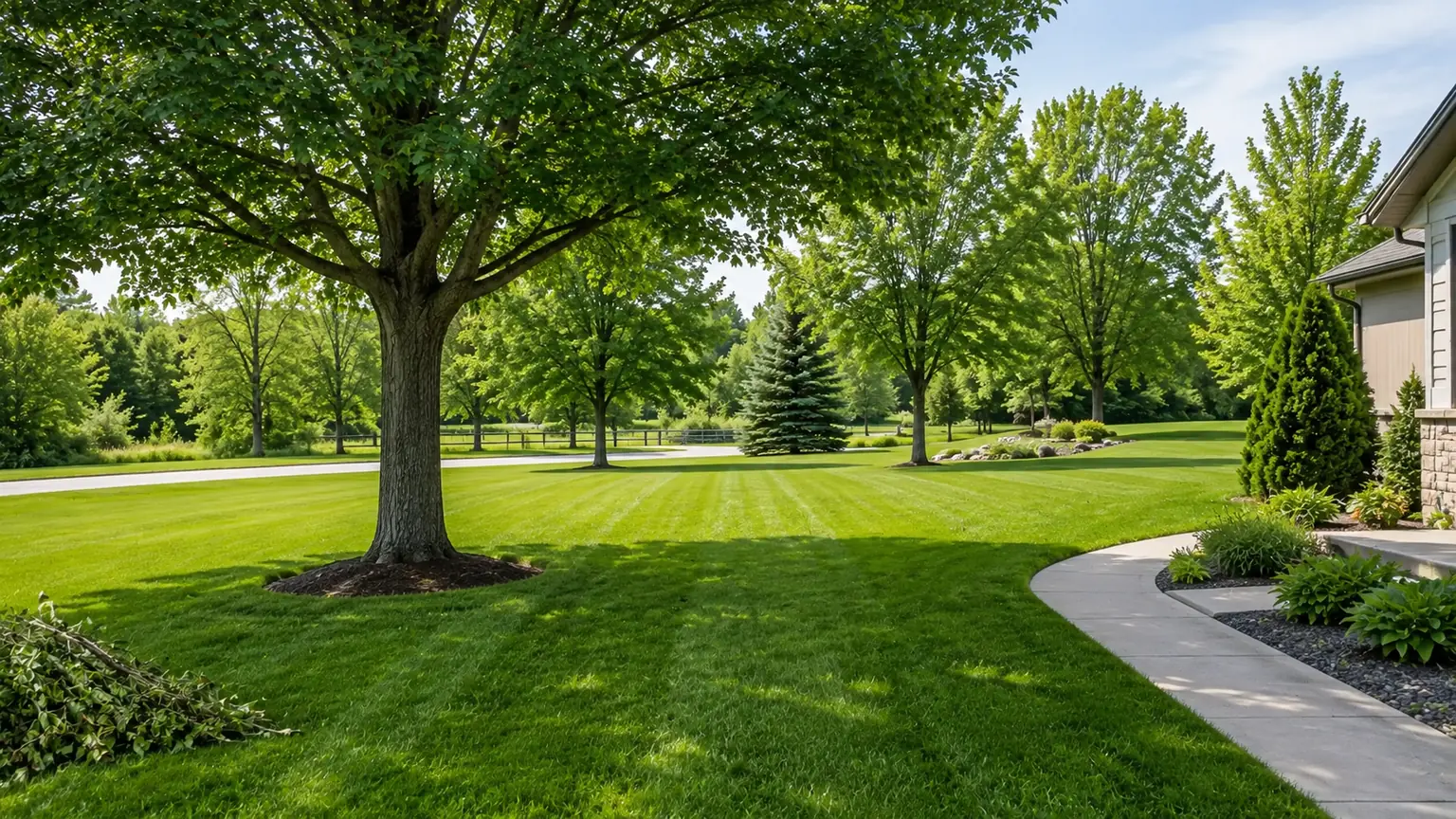
Keep the tree recognizable as itself
Tree Trimming for Structure, Clearance, and Natural Form
Good Tree Trimming removes a reasoned selection of branches while preserving the character and living structure of the tree.
Trees connect the home, lawn, walks, parking areas, and skyline of a property. When branches cross, hang too low, rub the roof, block an entrance, or carry deadwood, the whole site can feel crowded. However, cutting too much at once can create a different problem by stressing the tree and encouraging weak, rapid regrowth.
Jason’s Lawn Care approaches trimming as selective property care. We review the branch pattern, species, season, target clearance, and the area beneath the canopy before recommending work. Therefore, the plan responds to the actual tree and the way the Greater Mankato property functions instead of forcing every canopy into the same shape.
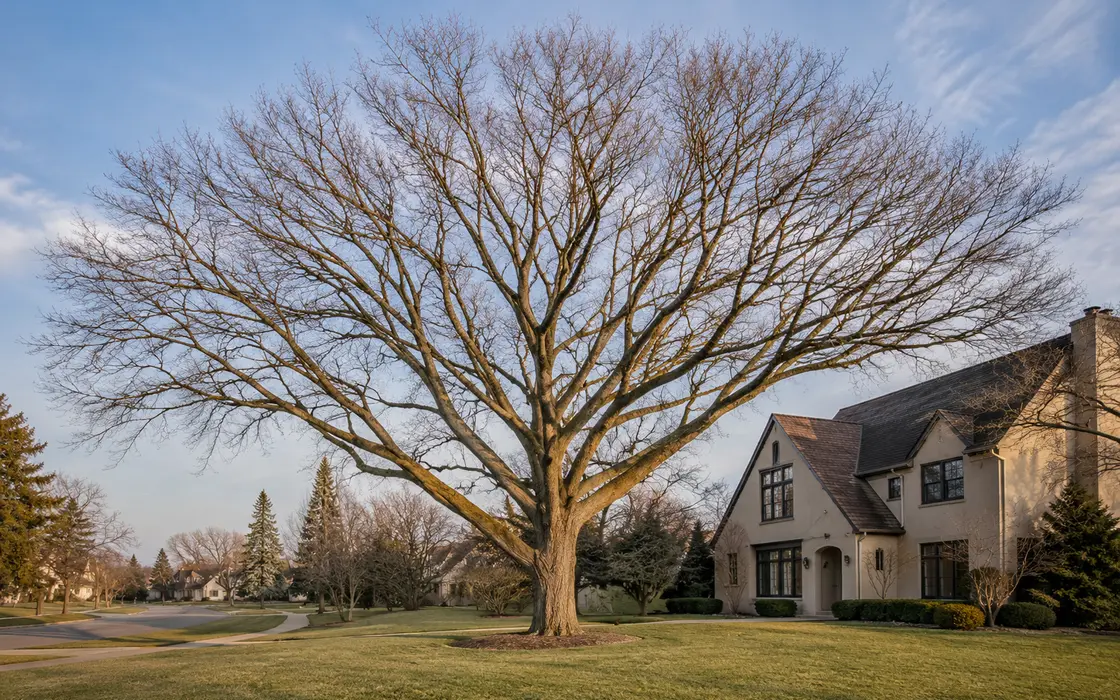
Every cut changes future growth
The Details Behind Responsible Tree Trimming
A useful trimming plan identifies why a branch should leave, where the cut belongs, and how much live canopy the tree can reasonably lose. The finished tree should look balanced, not obviously stripped or topped.
Read the Branch Structure
Crossing limbs, narrow unions, deadwood, suckers, and crowded interior growth tell different stories. The first step is identifying which condition actually affects health, clearance, or form.
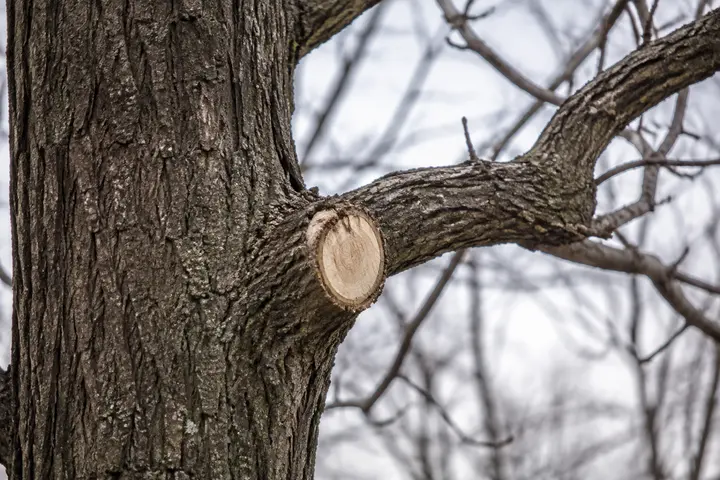
Respect the Branch Collar
A proper removal cut stays just outside the swollen collar where branch and trunk tissues meet. Flush cuts and long stubs both interfere with the tree’s natural response.
Create Useful Clearance
Branches near roofs, walks, signs, or sightlines need enough room for present use and future growth. Selective reduction protects the relationship without carving an unnatural gap.
Finish With a Balanced Canopy
We step back from individual cuts and read the complete silhouette. The remaining crown should distribute weight and foliage without a hollow center or abrupt flat side.
Species and season determine the window
Tree Trimming Timing Is Part of the Work
Late winter is a practical pruning period for many Minnesota trees because the branch structure is visible and the tree has not begun active spring growth. Even so, species-specific risks can change the schedule. Oak wilt, fire blight, bleeding sap, bloom timing, and evergreen growth habits all deserve consideration before a live branch is removed.
For instance, spring-flowering shrubs form buds on older wood, so poorly timed trimming can remove the next display. Oaks require special attention during high-risk periods, while large or hazardous branches demand a qualified tree-care professional and appropriate equipment. Consequently, a safe answer may be to wait, narrow the scope, or refer work beyond normal property maintenance.
The University of Minnesota Extension’s pruning guide outlines branch-collar cuts, timing concerns, and reasons to avoid topping. Those principles support our approach: keep the objective clear, make fewer better cuts, and preserve the natural form whenever possible.
A cut should have a clear purpose
Tree Health and Property Clearance Must Work Together
Property owners often call because a branch touches the roof, blocks a walkway, reaches over parking, or hangs into the mowing route. Those are practical concerns, yet the nearest cut is not always the best cut. Following the branch back to an appropriate union may create a cleaner reduction and avoid leaving weak sprouts at the end of a stub.
Dead, damaged, or rubbing branches can also draw attention during the review. Removing them may improve the canopy, but the work should not become an excuse to thin every interior limb. Leaves power the tree. Therefore, enough live crown must remain to support growth, shade bark, and maintain the structure that gives the tree value.
When a target branch is too large, too high, storm-loaded, decayed, or near utility conductors, normal landscape trimming is not the right service. We will not present unsafe work as routine. Instead, the scope should move to a properly qualified specialist with the equipment and credentials the risk requires.
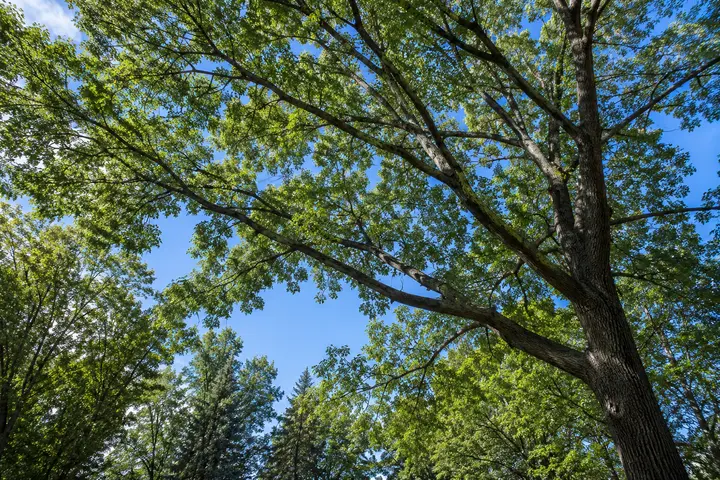
The surrounding site shapes the objective
Tree Trimming for Residential and Commercial Sites
Residential trees around daily life
At a home, branches interact with roofs, gutters, decks, gardens, play areas, driveways, fences, and neighboring property. A useful plan protects those relationships without turning a mature tree into a small ornamental shape. In addition, the route for removing cut material must avoid lawn damage and sensitive plantings below.
Homeowners can help by identifying property lines, hidden lighting, irrigation, septic components, pet areas, and any branch with a history of dropping pieces. That context lets the review focus on what the household actually needs from the tree.
Commercial trees around access and visibility
Commercial canopies often frame signs, entrances, parking stalls, pedestrian routes, lighting, and delivery areas. Clearance needs to support those uses while protecting the public-facing appearance of the site. Therefore, selective raising or reduction may matter more than broad thinning across the entire crown.
Scheduling and cleanup are equally visible on a business property. Cut branches should not block customer routes or remain scattered after the structural work ends. A complete visit includes an orderly work zone and a final view of the tree from the primary arrival points.
Restraint is a professional decision
The Best Tree Trimming Often Removes Less
A finished tree should look safer, clearer, and better balanced without looking like its natural canopy was replaced by a haircut.
Over-pruning can shift weight, expose bark to intense sun, reduce energy production, and trigger dense sprouts near large cuts. By contrast, a limited set of well-placed removals can solve the immediate clearance problem while leaving the tree capable of responding normally.
Future growth belongs in the decision too. A branch reduced at a suitable lateral may redirect growth more predictably than one cut at an arbitrary point. Meanwhile, young trees can benefit from small structural corrections before competing limbs become large. Thoughtful timing now may reduce the need for heavier intervention later.
Jason’s Lawn Care brings a property-maintenance perspective to every review. We consider how the tree affects mowing, snow, access, presentation, and the landscape around it. However, we keep the living tree at the center of the plan and state clearly when the requested scope belongs with a specialist.
Clear information makes the review useful
Preparing for a Tree Trimming Estimate
Before the visit, identify the branches that concern you and explain what they affect. Photos from windy conditions, leaf-on months, or a recent storm can help if the problem is not obvious during the appointment. Also, confirm property boundaries and point out utility lines, irrigation, lighting, fragile beds, or underground systems near the access route.
Move vehicles, furniture, toys, and portable decorations away from the likely drop and cleanup area when work is scheduled. Keep people and pets out of the active zone. Finally, do not attempt to pull down a hung limb or cut a loaded branch before the crew arrives, since stored tension can make an unstable situation more dangerous.
- Name the objectiveExplain the clearance, damage, or form concern.
- Mark site constraintsIdentify utilities, boundaries, and fragile areas.
- Open the work zoneMove vehicles and portable property away.
- Leave hazards aloneKeep distance from hanging or storm-loaded limbs.
Selective work, clearly defined
Request a Tree Trimming Review
Tell us which branches concern you, what clearance the property needs, and how the area below the tree is used. Jason’s Lawn Care will review the scope and be direct about whether it fits our service.