
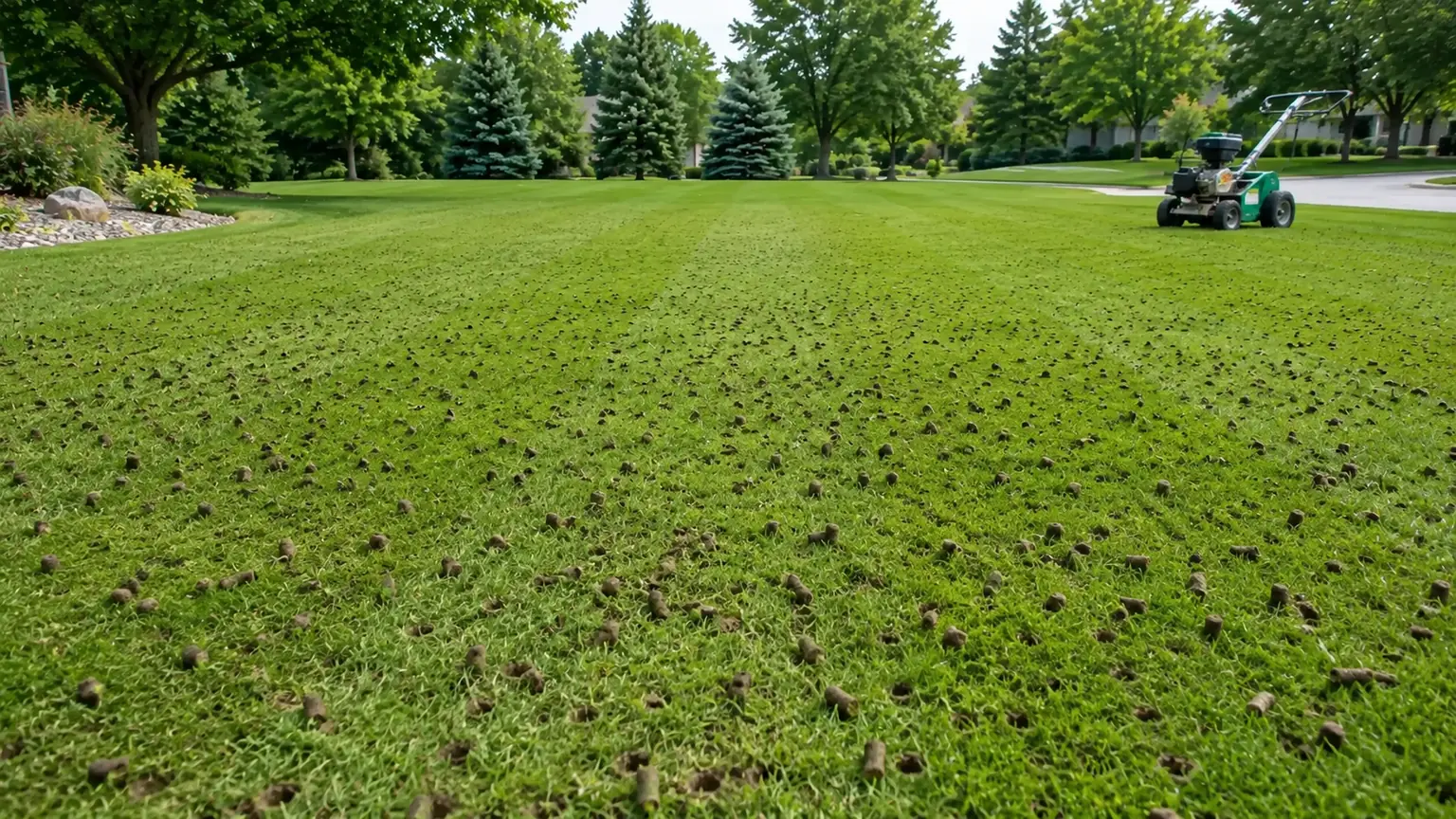
Create space where the root zone needs it
Lawn Aeration for Compacted Greater Mankato Turf
Lawn Aeration works below the grass blades, where foot traffic, equipment, and heavy soil can limit the movement of air and water.
Healthy turf depends on connected pore space in the soil. When that space compresses, rainfall may run across the surface, roots can remain shallow, and heavily used areas may thin faster than the rest of the lawn. Core aeration addresses that physical restriction by removing small plugs of soil and leaving temporary openings through the compacted layer.
Jason’s Lawn Care plans the visit around the property rather than treating aeration as a race across open grass. We consider soil moisture, turf strength, slopes, irrigation, hidden utilities, recent weather, and the paths people use most. Therefore, the pattern reflects the actual pressure points of a Mankato home or commercial site.
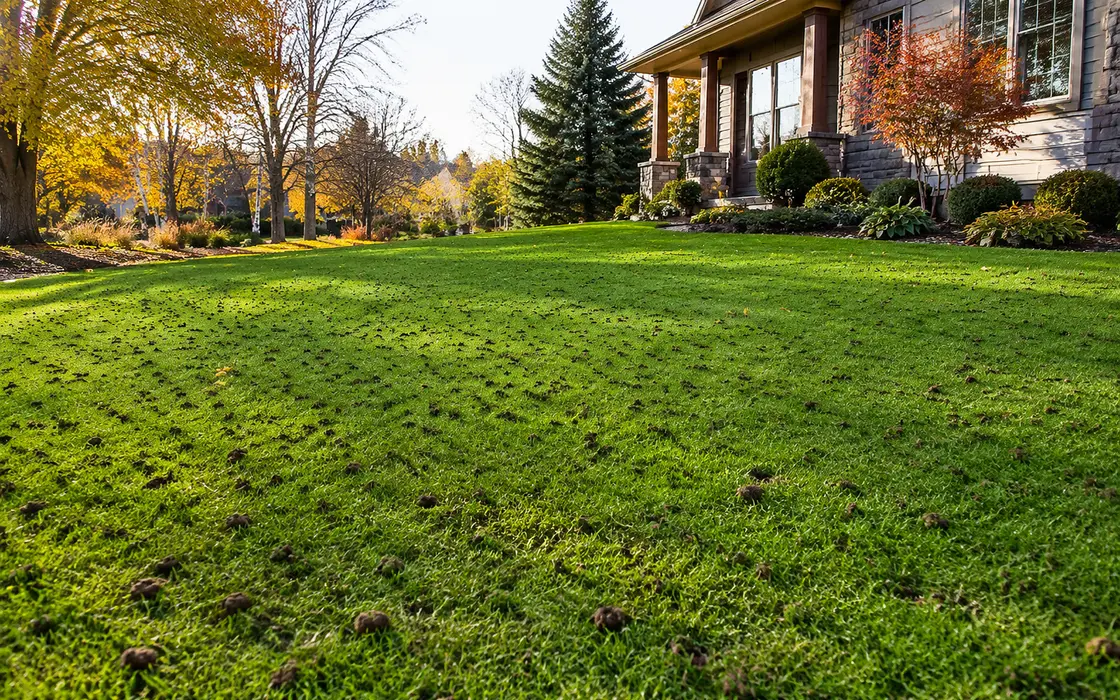
Useful openings reach the soil
What Core Lawn Aeration Changes Beneath the Surface
The value of Lawn Aeration comes from the soil cores, their coverage, and the recovery conditions that follow. A few decorative holes do not provide the same result as a deliberate pattern through compacted turf.
Remove Soil Cores
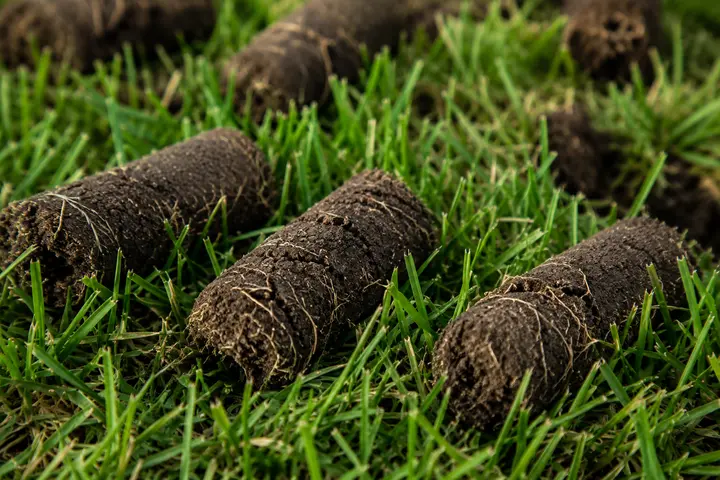
Hollow tines lift small plugs from the root zone. That removal creates temporary space instead of pushing surrounding soil tighter with a solid spike.
Open Water Pathways
The new channels give water a route below a sealed surface. However, drainage problems caused by grading or standing water still require a different solution.
Focus on Traffic Zones
Gate openings, play routes, mower turns, and entrance corridors often compress first. Extra attention in those locations makes the service fit the way the property is used.
Let Cores Return Naturally
Soil plugs break down through rain, mowing, and normal weather. Leaving them in place returns soil to the surface and avoids unnecessary collection.
Moist soil, active turf, better recovery
Lawn Aeration Timing Depends on Conditions
Soil moisture determines whether hollow tines can pull useful cores. Ground that is extremely dry may resist penetration, while saturated soil can smear, rut, and compact under traffic. A moderately moist profile usually supports cleaner extraction and a more consistent pattern. Consequently, recent rain and irrigation matter in the days before the visit.
Cool-season turf also needs time to close the openings. Late summer into early fall often combines warm soil with favorable shoot growth in Minnesota, which gives the lawn a strong recovery window. Spring can work in selected situations, yet weed pressure and wet soils require more caution. The decision should follow the lawn’s condition rather than a fixed promotional date.
The University of Minnesota Extension’s lawn cultivation guidance explains why hollow-tine aeration offers long-term value and why several directions may help break up compacted soil. We use that principle to think about coverage, but the final route still responds to obstacles, slopes, sensitive areas, and access.
Temporary disruption, lasting purpose
Soil Plugs Are Evidence of a Real Aeration Visit
Freshly aerated turf looks different for a short period. Small cores sit across the surface, holes remain visible between the grass blades, and dry soil may crumble onto the canopy. That appearance is expected. In fact, removing those cores is what distinguishes useful core work from shallow surface punctures.
Weather gradually breaks the plugs apart and returns their soil to the lawn. Meanwhile, the openings provide room for air, water, and root growth through the compacted zone. The lawn does not need to be rolled flat or immediately raked clean. Aggressive cleanup can erase part of the benefit the service just created.
Aeration also does not correct every turf problem. Thin grass caused by deep shade, chronic standing water, poor grading, insects, or disease needs a separate diagnosis. For that reason, we avoid presenting Lawn Aeration as a cure-all and focus on the physical soil conditions it can reasonably improve.
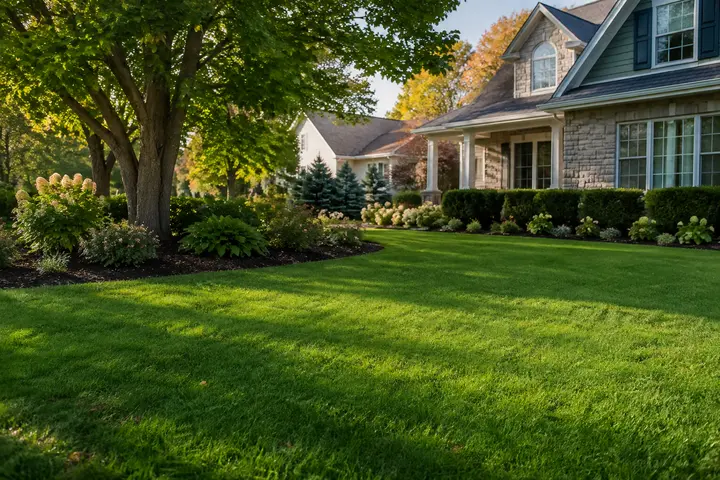
Compaction patterns follow daily use
Lawn Aeration for Homes and Commercial Properties
Residential lawns with concentrated traffic
Back gates, play areas, pet paths, parking edges, and the route between the house and yard often receive more pressure than open front turf. As a result, one residential lawn can contain several different soil conditions. We plan around those patterns instead of assuming equal compaction from corner to corner.
Homeowners should also identify underground irrigation components, invisible fence lines, shallow lighting wire, and newly installed turf. Those details help protect the property and allow the route to remain productive. Afterward, normal weather and mowing will gradually soften the visible cores.
Commercial turf shaped by access
Commercial sites may carry repeated pedestrian traffic near entrances, employee paths, signs, outdoor seating, loading areas, or shared parking. Turf in those corridors can harden while decorative areas remain relatively open. Therefore, a useful plan gives pressure zones deliberate attention without disrupting areas that do not need the same intensity.
Timing matters around customers and tenants as well. Although the cores are temporary, owners should expect a short-lived change in appearance. Clear scheduling and communication keep that normal stage from becoming a surprise on a customer-facing property.
Cultivation should answer a real pressure
Aeration Works Best as Part of Thoughtful Lawn Care
The purpose of Lawn Aeration is not to make holes. It is to restore useful space in soil that has lost it.
Compaction returns when the same pressures continue. Repeated traffic over wet ground, tight turning patterns, construction access, and heavy use can close soil pores again. Therefore, the long-term plan may include changing routes, protecting saturated areas, or adjusting how the lawn is used during vulnerable periods.
Mowing and watering habits matter too. A healthy leaf canopy supports deeper roots, while frequent shallow watering can keep growth close to the surface. Even so, aeration cannot manufacture good soil structure by itself. It creates an opportunity for the turf and maintenance plan to work more effectively together.
With more than 20 years of local experience, Jason’s Lawn Care understands how quickly Minnesota conditions can shift from wet spring soil to summer stress and active fall growth. That perspective helps us choose a sensible service window and explain what the owner should expect before, during, and after the visit.
Good access protects the property
Preparing Your Lawn for Core Aeration
Before the appointment, mark every irrigation head, shallow utility, invisible fence, drain component, and other hidden feature in or immediately beside the turf. Clear toys, hoses, pet waste, portable signs, and loose landscape items. In addition, unlock gates and move vehicles that could block the route between lawn sections.
Moisture should support coring without leaving the ground saturated. Follow any pre-visit watering guidance that fits current weather, and report standing water or soft areas before work begins. Once aeration is complete, leave the soil plugs in place and limit unusually heavy traffic until the surface firms.
- Mark hidden systemsIdentify irrigation, wires, drains, and utilities.
- Open every routeClear gates, vehicles, and portable objects.
- Check soil moistureAvoid both powder-dry and saturated conditions.
- Keep the coresLet normal weather return soil to the surface.
Give compacted soil room to function
Request a Lawn Aeration Estimate
Tell us where the lawn stays hard, sheds water, or receives the most traffic. Jason’s Lawn Care can review the property and plan Lawn Aeration around its soil, access, and seasonal condition.