
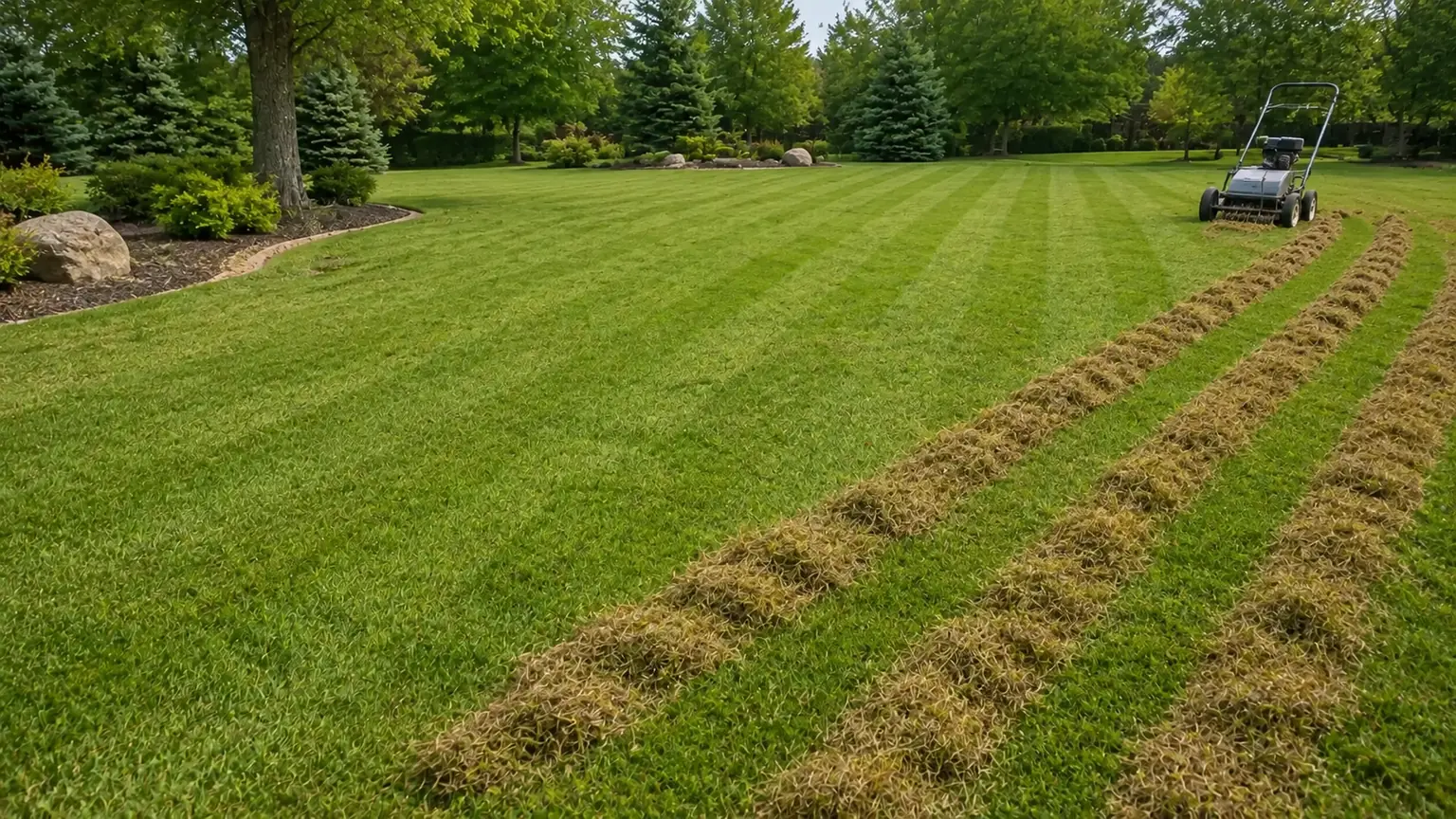
Remove the barrier, not the lawn
Dethatching That Helps Turf Breathe and Recover
Dethatching should solve a real thatch problem, not become an automatic yearly treatment.
Thatch is the interwoven layer of living and dead stems, roots, and organic material that develops between green grass and the soil. A modest layer can cushion the crown and reduce moisture loss. However, excessive buildup can interfere with water movement, hold roots too close to the surface, and make the lawn feel soft underfoot.
Jason’s Lawn Care looks at the turf before recommending removal. We consider the depth and density of the layer, the lawn’s vigor, recent weather, soil firmness, and the amount of recovery time left in the season. Therefore, the service targets a specific condition instead of putting every Greater Mankato lawn through the same aggressive routine.
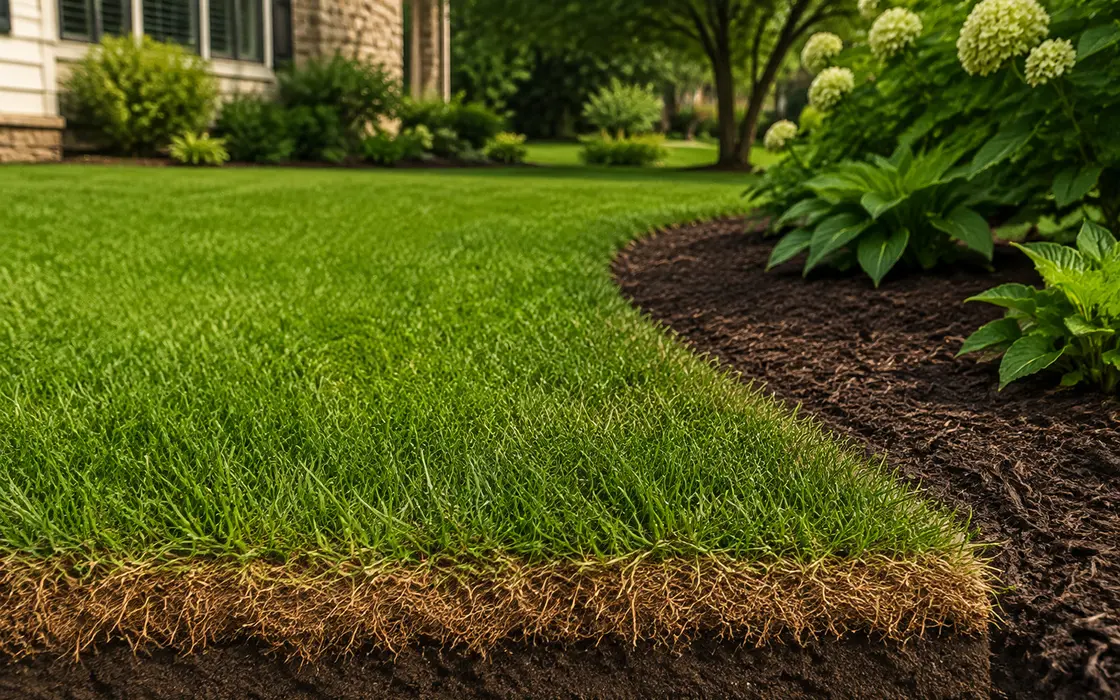
A controlled reset at the soil line
What a Thoughtful Dethatching Visit Actually Addresses
Effective Dethatching depends on identification, restraint, debris handling, and recovery planning. The goal is to open the surface enough to restore contact with soil while preserving the healthy plants that will fill the lawn back in.
Confirm the Thatch Layer
Brown leaf litter on top of the lawn is not automatically thatch. We look beneath the green canopy and evaluate the fibrous layer where grass crowns meet the soil.
Match Intensity to the Lawn
A thin, stressed, shaded, or newly established lawn needs different handling from dense mature turf. Controlled depth helps avoid tearing out healthy crowns.
Remove Released Material
The work is not finished when the layer loosens. Lifted material must be collected so it does not settle back over the turf and block light or moisture.
Leave a Recovery Path
After the surface opens, the lawn needs appropriate moisture, time, and limited traffic. A clear aftercare plan helps the remaining turf reconnect across the treated area.
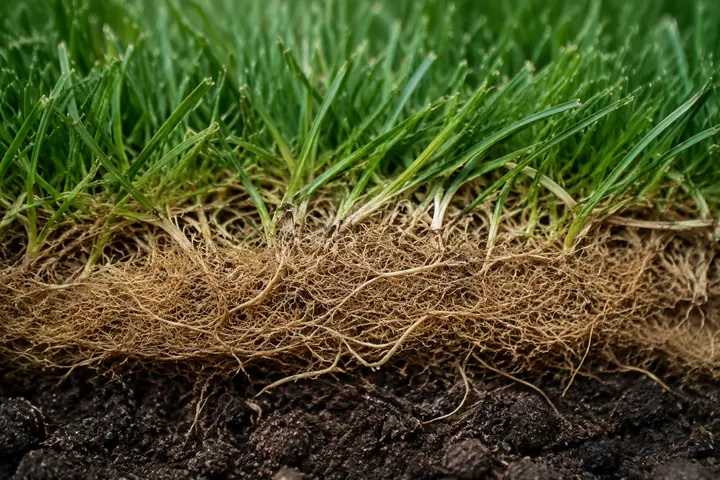
Active growth gives the lawn a way back
Dethatching Timing Should Follow Minnesota Turf
Dethatching temporarily opens and disturbs the turf surface, so timing matters as much as removal depth. Cool-season lawns recover best when they are actively growing and temperatures support new shoots and roots. By contrast, a lawn under midsummer heat or drought stress has less capacity to repair the openings created by the work.
Late summer into early fall often provides the most useful recovery window in southern Minnesota. Soil remains warm, cooler nights return, and many annual weeds germinate less aggressively than they do in spring. Even so, current moisture and turf condition still matter. A calendar date cannot compensate for saturated soil, drought stress, or a lawn already weakened by another problem.
The University of Minnesota Extension’s thatch guidance also distinguishes vertical mowing from ineffective mower attachments and notes that severe buildup may call for aeration first. That distinction is important because the best service is the one that matches the cause, not simply the most forceful treatment available.
Diagnose before disturbing healthy turf
Thatch Is Not the Same as Loose Surface Debris
A layer of dry leaves, clippings, or matted grass can sit above the turf without forming the dense organic mat that requires Dethatching. Likewise, poor water movement can come from compacted soil rather than excess thatch. Treating the wrong layer may leave the original problem untouched while adding stress the lawn did not need.
For that reason, our evaluation focuses on where resistance occurs. A spongy layer near the crowns suggests a different response from hard soil below a relatively open surface. We also look for shade, drainage patterns, irrigation habits, and unusually dense growth because those conditions influence how organic material accumulates and decomposes.
Once the cause is clear, the work can remain appropriately narrow. Some lawns need targeted removal in specific zones, while others benefit more from core aeration or a change in maintenance habits. Honest Dethatching service starts with that distinction and avoids selling disruption as routine care.
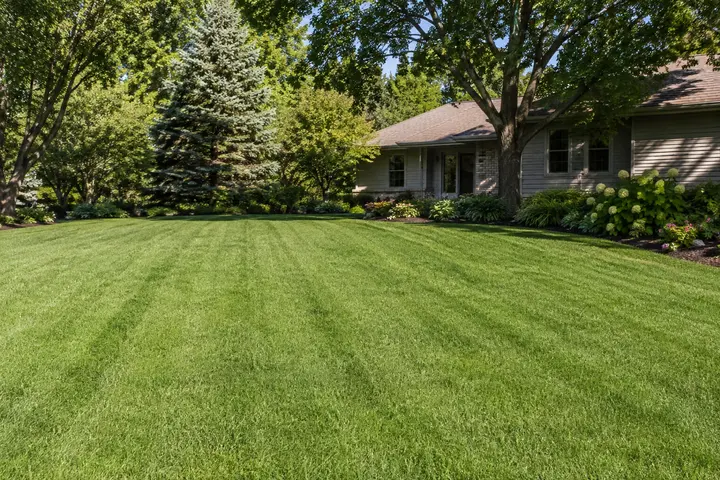
The use of the property changes the plan
Residential and Commercial Dethatching Need Practical Scheduling
For home lawns and active yards
Home lawns often include shaded sides, pet routes, play areas, irrigation heads, garden borders, and narrow gates. Those details affect access as well as recovery. Therefore, we identify sensitive areas before work begins and avoid treating low-use corners exactly like the sunny front lawn.
After service, a residential property may need a temporary reduction in foot traffic while the turf settles. Clear expectations are useful when children, pets, or outdoor events depend on the lawn. The result should support daily life rather than create a surprise interruption.
For commercial and shared properties
Commercial turf can experience repeated traffic near entrances, signs, loading areas, and parking transitions. In addition, irrigation coverage and soil conditions may vary widely across one site. A section-by-section review helps separate true thatch buildup from compaction caused by use.
Scheduling also needs to respect tenants, customers, and visible debris. Because vertical removal produces substantial loose material, collection and final cleanup are part of the presentation. The site should not trade one maintenance problem for another at the end of the visit.
Selective care protects the lawn
Automatic Power Raking Is Not a Maintenance Plan
Good Dethatching removes a barrier at the right moment. It does not punish healthy turf simply because spring or fall appeared on the calendar.
Thatch develops from growth and decomposition over time. Factors such as grass type, heavy nitrogen use, frequent shallow watering, soil biology, and compaction can influence the balance. Consequently, removing the layer without considering how it formed may lead the same condition to return.
A better long-term approach combines observation with routine care. Sensible mowing height, appropriate watering, and core aeration when compaction is present can support a more active soil surface. Although no single practice prevents every buildup, small maintenance decisions often matter more than repeating an aggressive correction.
Jason’s Lawn Care brings more than 20 years of local experience to that judgment. We focus on the condition visible now, the recovery window ahead, and the way the owner uses the property. As a result, the recommendation stays tied to the lawn rather than a generic seasonal checklist.
Set the lawn up for a clean visit
Preparing for Dethatching and Recovery
Before service, remove hoses, toys, portable decorations, pet waste, and other loose objects from the treatment area. Mark irrigation heads, invisible fencing, shallow lighting wire, newly seeded patches, and any low features hidden in the grass. Also, confirm gate access and keep vehicles away from the route the crew will use.
Afterward, expect the lawn to look more open before it looks fuller. Follow the watering and traffic guidance provided for the actual conditions, and avoid stacking another disruptive treatment onto stressed turf without a reason. If seeding or another service is planned, coordinate the sequence so each step supports the next.
- Clear the surfaceMove loose items and open gates before arrival.
- Mark hidden featuresIdentify irrigation, wires, and sensitive turf.
- Plan for debrisKeep access open for collection and removal.
- Protect recoveryLimit traffic and follow condition-based aftercare.
A better lawn starts with the right diagnosis
Request a Dethatching Estimate
Tell us what the lawn feels like, where water has trouble moving, and when the area last received cultivation. Jason’s Lawn Care can review the property and determine whether Dethatching fits the condition.